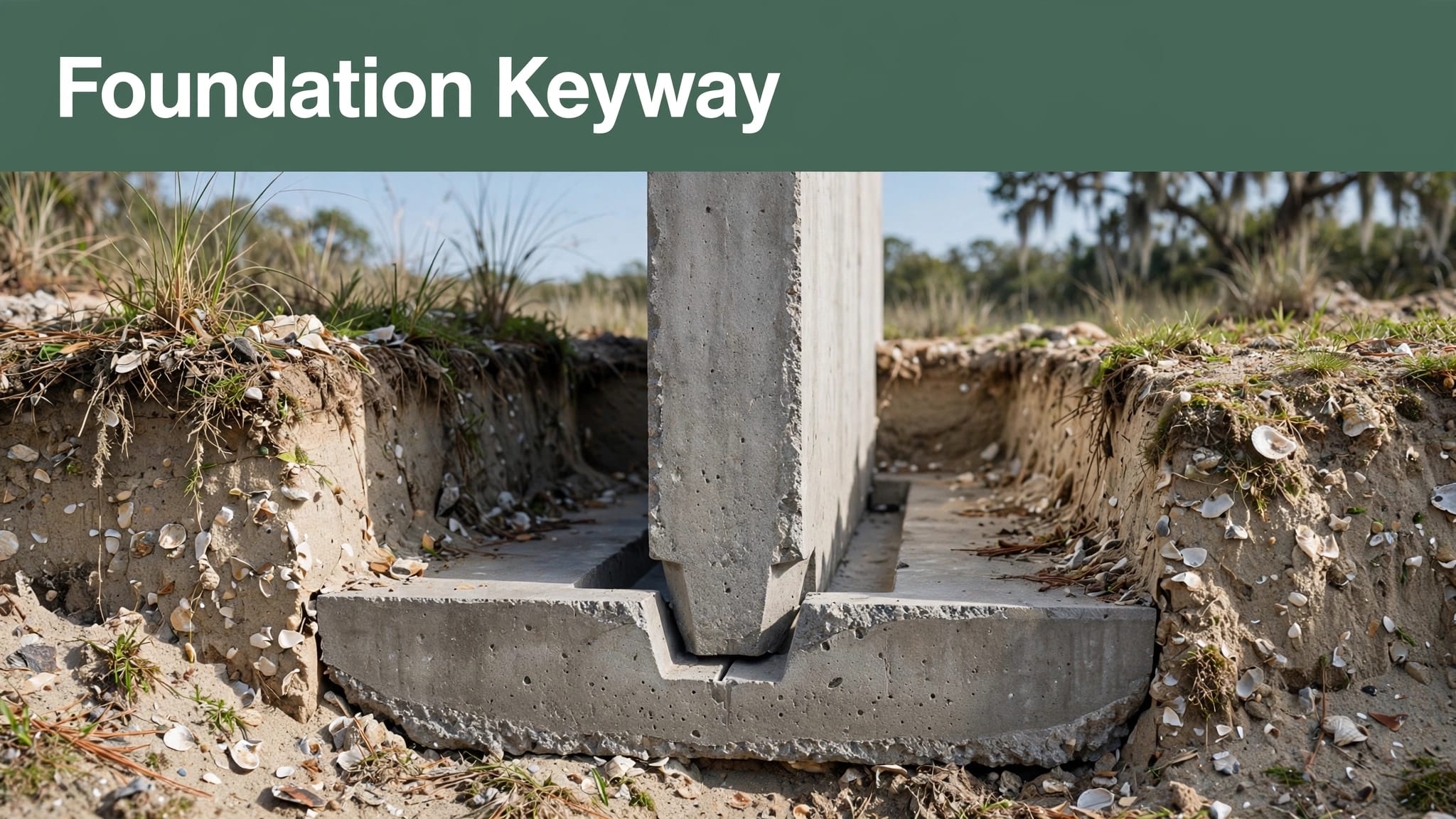

A new slab can look ready for traffic before it has enough strength to carry the load. Concrete maturity testing helps estimate in-place strength using the concrete’s temperature history, rather than its appearance or age alone.
For Charleston homeowners and businesses, that information can support a better reopening decision. However, an estimate still needs a defined strength requirement, proper curing, and approval from the person responsible for the work.
The starting point is understanding what maturity measures and what it leaves unanswered.
What Concrete Maturity Testing Measures
Maturity testing tracks how temperature and elapsed time relate to strength development. ASTM C1074 provides the framework for this method, which requires a strength-maturity relationship established for the actual concrete mixture.
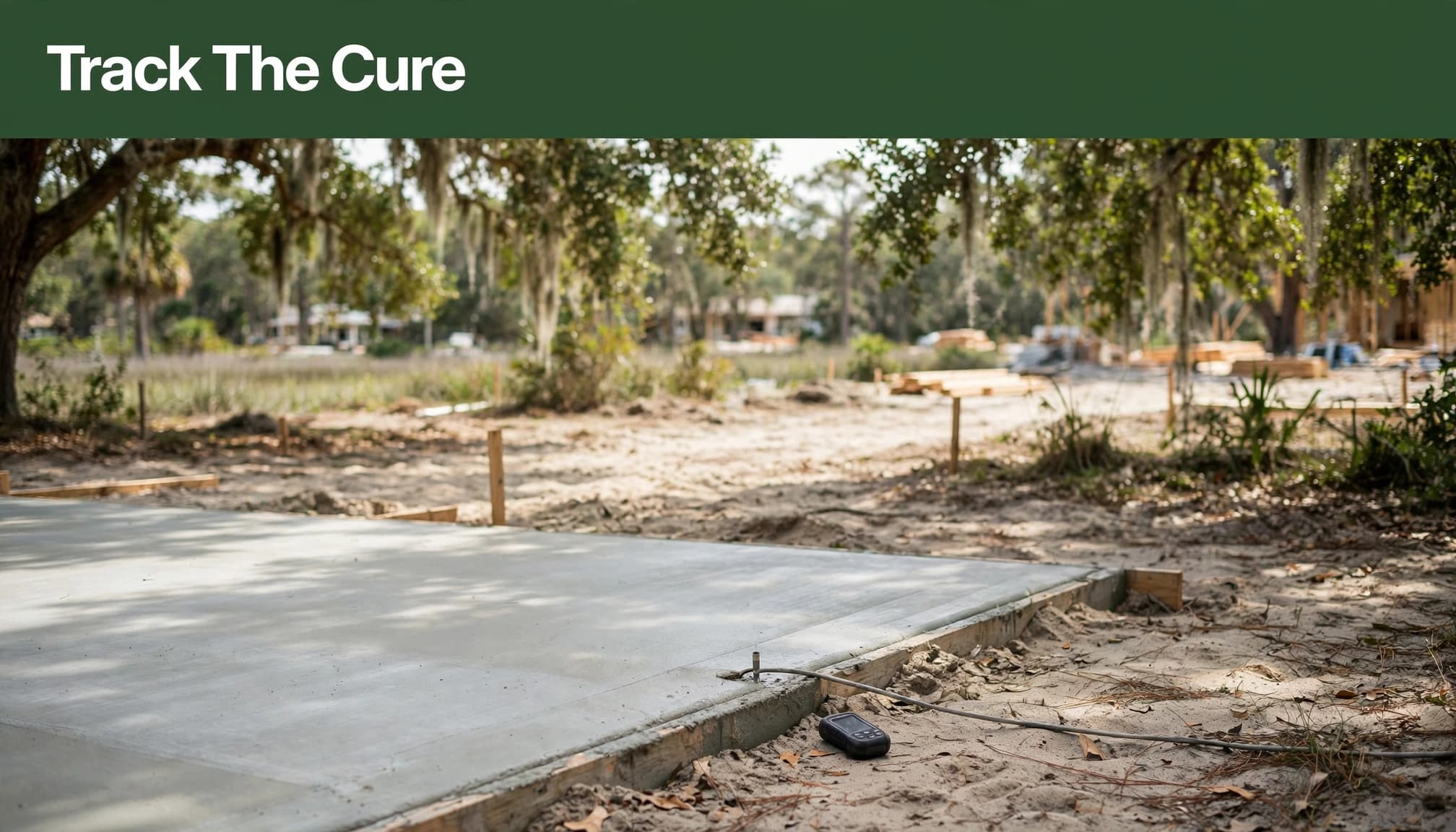
Temperature history adds context to concrete age
Concrete gains strength through hydration, the reaction between cement and water. Temperature affects the speed of that reaction, so two slabs placed together can develop strength at different rates.
One may receive direct afternoon sun while another stays shaded. Meanwhile, a cold night can slow early strength development.
The Federal Highway Administration’s maturity guidance describes using this standardized method to predict early in-place strength. The useful information is the concrete’s recorded temperature history, rather than an outdoor air reading or a calendar date.
An estimate needs a clear purpose
As Giatec’s maturity method guidance explains, maturity is a non-destructive approach to estimating in-place strength. It doesn’t directly crush or load the slab to measure its capacity.
That distinction matters when someone wants to reopen a driveway, remove forms, or bring equipment onto a floor. The project team must compare the estimate with the requirement for that particular activity.
A favorable reading also doesn’t establish that the slab has correct thickness, adequate reinforcement, or stable support.
Why Charleston Weather Changes Strength Development
Charleston’s humidity can make fresh concrete look protected from drying. Yet local conditions can change quickly, and the surface may behave differently from the concrete below it.
Summer heat doesn’t remove the need for moisture
Warm concrete generally develops early strength faster, but high temperatures also shorten the placement and finishing window. Direct sun and coastal wind can pull moisture from the surface despite humid air.
Because hydration needs water, a warm temperature record cannot excuse inadequate curing. A surface that dries too quickly may develop dusting, fine crazing, or a weak upper layer.
A concrete contractor in Charleston, SC should account for actual site exposure. An open driveway near the marsh can need different protection than a shaded backyard patio.
Cool nights and storms complicate the schedule
A mild afternoon doesn’t describe the conditions a slab will face overnight. Cooler concrete develops early strength more slowly, which can affect the following day’s planned access.
Rain creates a separate concern. Water striking concrete before it has sufficient surface resistance can damage the finish or wash away cement paste.
However, maturity monitoring doesn’t evaluate that damage. The crew still needs to inspect the surface and review curing conditions before approving use.
Local weather affects the estimate, but it also creates risks that the estimate cannot measure.
Start With the Actual Mix and Testing Plan
Maturity monitoring needs planning before placement. A Lowcountry concrete contractor, concrete supplier, testing provider, and responsible design professional should agree on its role where the project requires documented early strength.
The strength relationship must match the mixture
The method depends on a relationship between maturity and strength for the concrete being placed. Applying an unrelated curve can produce a misleading result, even when the temperature record is complete.
Changes to the approved mixture deserve review. Different cementitious materials or admixtures can change how strength develops.
The testing provider should confirm which relationship applies and how mix changes will be handled. Homeowners don’t need to perform those calculations, but they should expect a clear answer about the basis of the estimate.
The ASTM C1074 requirements overview identifies the strength relationship, temperature monitoring, and documentation as parts of the process.
Decide who can approve opening
Before the pour, establish the activity under consideration and who has authority to approve it. Walking across a patio and operating loaded equipment involve different demands.
The record should connect the estimate to the actual placement and intended use. Relevant information includes the mix identification, placement date, temperature history, and applicable opening requirement.
If readings are missing or the mixture differs from the approved basis, the testing provider should review the result. A dashboard number alone shouldn’t decide whether traffic barriers come down.
Match Reopening Decisions to the Intended Load
There isn’t one maturity reading that clears every concrete project for use. The maturity method’s practical applications include traffic opening and form removal, but each decision needs its own acceptance basis.

These common uses require different conversations before access begins.
| Planned use | What the opening decision must consider |
|---|---|
| Pedestrian access | Early strength, surface condition, and curing protection |
| Passenger vehicles | Slab design, support, and the approved vehicle-loading requirement |
| Delivery trucks or equipment | Heavier loads, concentrated contact areas, and project-specific approval |
| Furniture or storage | Concentrated loads and possible damage to the finish |
For a concrete driveway in Charleston, SC, permission to park a passenger car shouldn’t automatically include a delivery truck. Wheel loads, slab edges, and underlying support all matter.
Likewise, a stamped concrete patio in Charleston may need continued protection even after limited foot traffic becomes acceptable. Moving furniture can scratch the surface or damage a finish treatment.
Charleston concrete pool decks and local tabby concrete surfaces also need curing methods compatible with their intended texture and sealer. A strength estimate doesn’t determine when every finish product can be applied.
Permission for light foot traffic doesn’t authorize vehicle access or the end of curing.
The written opening instruction should describe permitted use clearly enough that owners, tenants, and delivery drivers understand the restriction.
How Maturity Fits Alongside Other Concrete Tests
Several tests can appear in the same project record, but they answer different questions. Maturity monitoring adds information about strength development without replacing every required acceptance test.
Arrival temperature checks the fresh concrete
ASTM C1064/C1064M describes measuring the temperature of freshly mixed concrete. That reading helps the crew assess the arriving material against the project’s requirements and placement conditions.
However, one arrival reading isn’t a temperature history. It doesn’t show how the slab cools overnight or warms during the next afternoon.
The standard also doesn’t create one universal acceptable temperature for every pour. Project requirements determine acceptance, while the crew still needs a workable plan for placement, finishing, and protection.
Strength tests and maturity have different roles
Compressive-strength testing measures the strength of prepared specimens. Maturity uses the mixture’s established relationship and temperature record to estimate strength within the placement.
These methods can complement each other when the approved testing plan calls for both. However, owners shouldn’t assume maturity removes the need for specified cylinder tests or other verification.
If results conflict, the responsible testing professional or design team should review the records and determine the next step. The site’s concrete curing and strength advice provides additional context for these testing and construction decisions.
Curing and Site Preparation Still Matter
Useful strength information can’t repair poor construction. The slab still needs moisture control, appropriate weather protection, and support suited to its intended loads.
Protect hydration and the finished surface
Curing retains moisture and maintains conditions that allow hydration to continue. Depending on the project, the approved method may involve a membrane-forming compound, wet coverings, or another specified approach.
Humidity alone doesn’t perform that job. Likewise, spraying the surface once doesn’t provide sustained moisture control.
Curing compounds also need compatibility with later coatings, bonded finishes, or decorative treatments. Discuss those products before placement so the curing plan doesn’t create a bonding problem later.
Reaching an opening requirement doesn’t automatically end the specified curing period.
Keep strength separate from ground support
For concrete slab installation in Charleston, preparation below the concrete remains part of long-term performance. Soft fill, standing water, and poorly managed runoff can create problems that maturity readings won’t reveal.
A strong slab can still crack or settle if the base moves. Thickness, joint layout, reinforcement, and drainage also need attention.
Gorilla Concrete’s driveway, patio, and slab services cover projects where those construction details matter alongside curing. Testing supports the work; it doesn’t replace preparation or correct placement.
Key Takeaways for Charleston Property Owners
Concrete maturity testing is most useful when an early-use decision needs documented support. Many routine residential projects won’t need continuous monitoring, especially when the schedule allows normal protection and curing.
Before committing to a reopening date, ask the project team:
- What strength requirement applies to the planned use?
- Does the maturity relationship match the concrete being placed?
- Who reviews the results and approves access?
- What curing and traffic restrictions remain after opening?
A clear answer should connect the test result to your project. Avoid treating a neighbor’s driveway schedule as evidence for your own slab.
Plan Opening Around Evidence
A hard-looking surface is a poor substitute for an approved strength-based decision. Maturity monitoring can provide useful evidence when the mix relationship, temperature record, and intended load are clear.
Keep curing and access restrictions in place until the responsible project team approves the next step. Opening approval should identify what the concrete can carry, not simply announce that it’s ready.
For a Charleston home or business project, Get a Free Quote and discuss the intended use, deadline, and testing needs before placement.
Frequently Asked Questions
Can maturity testing guarantee an opening date?
No. It estimates strength development under recorded temperature conditions; it doesn’t guarantee when the concrete will satisfy a project’s opening requirement.
Weather changes, curing problems, mix differences, or incomplete records can affect the decision. Therefore, an early opening date should remain conditional until the responsible person reviews the evidence.
If access is essential for business operations, discuss that deadline before the pour so the testing and protection plan can address it.
Does maturity testing show whether concrete is dry enough for a coating?
No. A maturity estimate concerns strength development, while coating readiness also depends on moisture conditions and the product’s requirements.
Concrete can gain strength while retaining moisture. Strength approval therefore shouldn’t become automatic permission to apply epoxy, install flooring, or seal a decorative surface.
Follow the coating manufacturer’s instructions and any required moisture testing. Also confirm whether the curing material needs removal or other preparation before the finish can bond properly.