
A new slab can develop fine cracks before the crew has even finished it. If you spot lines across a fresh driveway or patio, the first question is when they formed, because that helps identify the cause. Plastic shrinkage cracks appear while concrete is still workable. Charleston’s humidity can make the risk easy to underestimate, especially when sun and wind are drying the surface. Knowing what to look for helps you ask the right questions before a repair or a new pour.
Key Takeaways
- Plastic shrinkage happens when moisture leaves fresh concrete’s surface faster than water rises to replace it.
- Wind, direct sun, warm concrete, and low humidity increase the risk; humid weather doesn’t eliminate it.
- A shallow crack may be mainly cosmetic, but its depth and location matter more than its width alone.
- Surface protection must start during placement. Curing should follow as soon as finishing permits.
- Control joints manage later shrinkage stress. They don’t prevent cracks that form while the surface is still plastic.
What Plastic Shrinkage Cracks Look Like
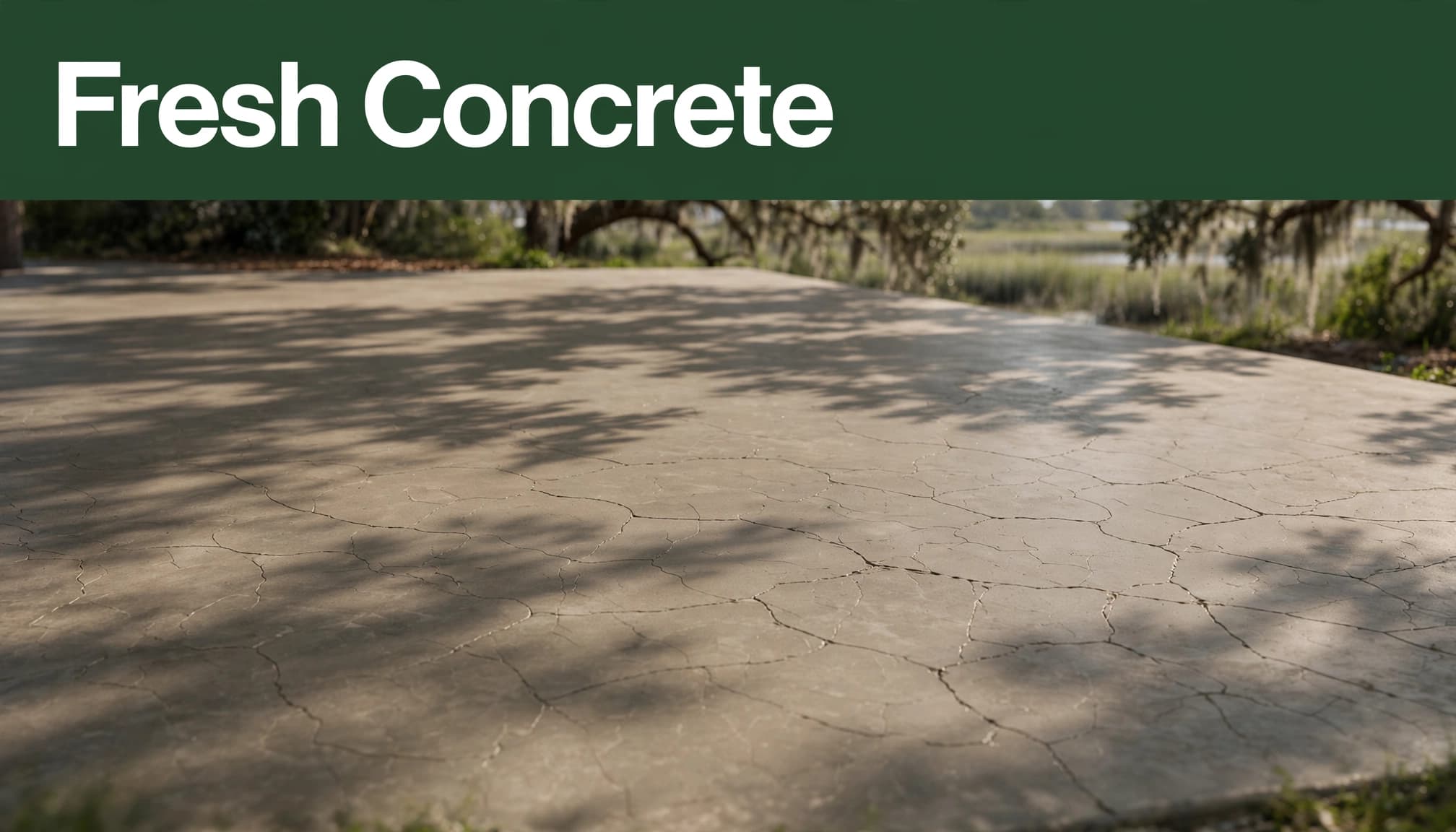
These cracks often appear as short, irregular lines across a slab’s surface. Several may run roughly parallel, sometimes with gaps between them. According to the National Ready Mixed Concrete Association’s cracking guidance, they can develop before the concrete sets, when the surface dries faster than moisture rises from below.
The timing is a useful clue. A crew might notice cracks while finishing, or a homeowner might see them shortly after the crew leaves. Once the slab hardens, appearance alone can’t establish their depth or prove exactly when they formed.
Look across the surface in low-angle light and photograph any lines with a ruler for scale. Note whether they cross a driveway wheel path, sit near an edge, or follow a decorative pattern. Those details give a contractor more to work with than a close-up photo of a single hairline.
Why Plastic Shrinkage Cracks Form on Charleston Slabs
Fresh concrete releases water at its surface, a process called bleeding. If evaporation outruns that supply, the top layer contracts while the concrete beneath remains plastic. Tension in the surface can then open small cracks.
Watch the slab, not only the forecast
Air temperature is only part of the picture. Concrete temperature, relative humidity, wind, and sunlight all affect moisture loss. The American Concrete Institute’s hot-weather guide addresses these combined conditions rather than treating one air temperature as a universal cutoff.
A breezy, sunny afternoon may call for protection even when the air feels humid. Likewise, the surface of a broad, exposed driveway can behave differently from a shaded slab poured at the same address.
Evaporation rates are planning signals
Crews can estimate evaporation using air temperature, concrete temperature, humidity, and wind speed. Guidance commonly calls for precautions as the estimated rate approaches 0.2 pounds per square foot per hour, about 1.0 kilogram per square meter per hour. That figure is an action level, not a promise that lower rates are safe or higher rates will produce cracks.
Field conditions can also change during a pour. Clouds move, wind picks up, and a slab gains sun exposure as the day progresses. The evaporation-rate field guide explains why crews use the estimate alongside direct observation.
How to Tell These Cracks From Other Slab Problems
Plastic shrinkage is one possible diagnosis, not a name for every thin line in concrete. The crack’s timing, pattern, and surrounding conditions help narrow it down.
Crazing appears as a tight network of very fine surface lines, often more visible when the slab is damp. Drying-shrinkage cracks develop after hardening as concrete loses moisture and contracts. Control joints are intended to guide much of that later movement into planned lines.
Settlement deserves a different response. If one side of a crack drops, a slab tilts, or gaps keep widening, check the base and drainage. A soft or washed-out subgrade isn’t fixed by treating the surface. The same applies where movement appears beside a wall, step, or other fixed structure.
A control joint can guide later shrinkage, but it cannot rescue a surface that cracked before the concrete set.
Photographs taken over time are useful here. Record a crack’s width and location, then check it after heavy rain if movement or drainage is a concern. For more on related planning issues, see Charleston concrete slab and crack prevention advice.
Plan the Pour Before the First Truck Arrives
Preventing plastic shrinkage starts with a workable schedule. The crew needs enough people, clear site access, and coordinated deliveries to place and protect the slab without long delays. A large driveway or commercial slab may need more than one load, so truck spacing matters.
Prepare for changing weather
An early start may avoid the strongest afternoon sun, but the crew still needs a backup plan. Windbreaks, shade, and equipment for fogging can be ready before conditions demand them. When appropriate, the contractor can discuss concrete temperature or approved mix adjustments with the supplier.
The NRMCA’s hot-weather concreting guidance identifies high temperature, wind, and low relative humidity as conditions that can drive rapid evaporation. A concrete contractor in Charleston, SC, should assess those conditions at the site, not rely only on a forecast made the day before.
Separate surface protection from base preparation
A firm, properly graded base and drainage plan support the slab over time. They do not, by themselves, stop fresh surface moisture from evaporating. Both jobs deserve attention during concrete slab installation in Charleston.
Before scheduling, ask who will monitor weather, which surface-protection method is available, and when curing will begin. Those answers should fit the slab’s size and finish.
Protect the Surface Through Finishing and Curing
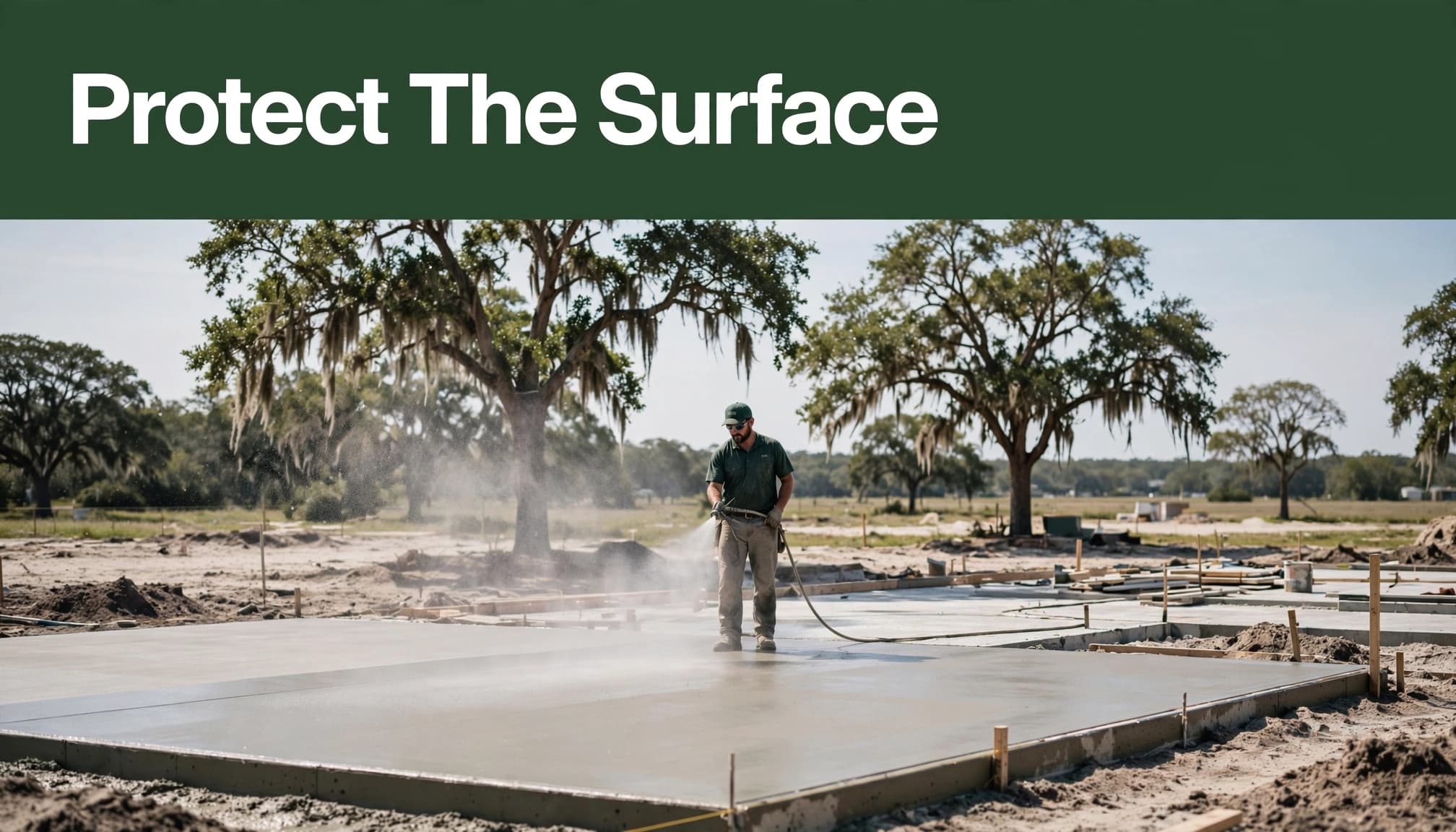
Once concrete is placed, the crew must respond to what the slab is doing. A wet sheen may be bleed water, while a drying area nearby could need protection. Finishing too early or working water into the top can create other surface problems.
Slow evaporation without weakening the finish
Fogging the air above the slab, using windbreaks, or applying an approved evaporation retarder can help limit early moisture loss. An evaporation retarder is a temporary finishing aid, not a substitute for curing. Crews should follow the product instructions and avoid spraying water directly onto the surface to make finishing easier.
If cracks appear while concrete remains plastic, a qualified finisher may be able to close them by properly reworking the surface. Once it hardens, that opportunity has passed.
Begin compatible curing promptly
After finishing is complete and free bleed water has disappeared, the crew should begin the specified curing method without an avoidable gap. A membrane-forming compound, wet covering, or other approved method can help retain moisture. The choice depends on the job and its final finish.
For decorative work, product compatibility matters. A curing material that suits plain broom-finish flatwork may not suit color, sealer, or a later bonded treatment. Curing also needs consistent coverage at edges and around forms, where missed areas are easy to overlook.
What to Do When a New Slab Has Cracks
Start with documentation, not a tube of filler. Take wide photos that show the cracks in relation to joints, edges, and traffic areas. Then take close-ups with a ruler and note when you first saw them.
Check severity before choosing a repair
Plastic shrinkage cracks are often shallow and may mainly affect appearance. Still, a contractor should examine their extent and depth before recommending a repair. A narrow opening can be deeper than it looks, while a visible surface line may have little effect on the slab’s use.
Ask for an assessment if cracks run through a heavily loaded area, admit water, or accompany chipping, a height difference, or movement. A foundation or other load-bearing element calls for closer evaluation than an ordinary patio surface. Don’t assume every crack needs replacement, and don’t assume every hairline can be sealed and forgotten.
Match the remedy to the slab
An isolated, stable surface crack may call for monitoring or a compatible repair material. More extensive cracking can require further investigation before anyone selects a treatment. The contractor should explain what the proposed repair can and cannot do, including how it will look against the original finish.
If you are planning a new slab or need an existing one assessed, Get a Free Quote and share photos, project dimensions, and any drainage concerns.
Why the Finish and Location Change the Plan
A concrete driveway in Charleston, SC, has to handle vehicle loads, so a crack in a wheel path deserves a close look. A stamped concrete patio in Charleston brings another concern: surface repairs may be more visible where color and pattern must match. For pool deck concrete in Charleston, drainage and a dependable slip-resistant texture also matter.
Tabby concrete in Charleston adds exposed oyster-shell character to the finish. That appearance calls for planning before placement, including how the surface will be protected and cured. A repair may stand out against the surrounding shell texture.
None of these finishes changes the basic cause of plastic shrinkage. Each does change how the crew schedules finishing and how a later repair might look. A Lowcountry concrete contractor should account for the use and finish before selecting products or setting a pour date. Gorilla Concrete’s Charleston concrete services include slabs, driveways, patios, pool decks, and decorative work.
Frequently Asked Questions
Will plastic shrinkage cracks keep growing?
Some remain shallow and stable. If a crack widens, changes elevation, or appears alongside settlement, have the slab assessed for another cause. Photos taken at intervals make changes easier to verify.
Will saw-cut control joints prevent them?
No. Saw-cut joints guide shrinkage after placement, while plastic shrinkage cracks can form before the concrete has set enough to cut. A good slab plan needs both timely surface protection and a suitable joint layout.
Does Charleston’s humidity cure concrete naturally?
No. Humidity may slow evaporation, but wind, sun, and warm concrete can still dry the surface. After finishing, the slab needs a curing method suited to its mix, weather, and finish.
A Better Start for Your Charleston Slab
The earliest cracks can appear before a new slab looks finished. Timing and depth help determine whether you’re seeing a surface blemish or a problem that needs further evaluation.
For the next pour, ask how the crew will monitor conditions, protect the fresh surface, and begin curing. Those decisions matter while the concrete is still workable, when prevention has the best chance to succeed.