
A concrete pour can look right on installation day while its mix tells a different story. If you’re planning outdoor work near Charleston, air entrainment testing is one way to check the fresh concrete before it becomes a driveway, patio, or slab.
The test measures air content, but it doesn’t decide what air content your project needs. That depends on the mix, the intended use, and the conditions the concrete will face. Knowing the difference helps you ask better questions before the truck arrives.
Key Takeaways
- Air entrainment testing measures air in fresh concrete; it doesn’t measure the size or distribution of individual air voids.
- Charleston’s salt air alone doesn’t establish a required air percentage. Exposure conditions and project specifications determine the target.
- ASTM C231 is commonly used for mixes with dense aggregate. ASTM C173 is an option when porous or lightweight aggregate makes the pressure method unsuitable.
- A passing air test doesn’t replace sound drainage, subgrade preparation, placement, finishing, or curing.
What air entrainment testing actually measures
Air-entraining admixtures create many small bubbles throughout a concrete mix. Those bubbles can give water room to expand when saturated concrete freezes. Air also affects how fresh concrete handles during placement.
A field test reports the total air content of a fresh sample as a percentage. It gives the crew a timely check against the specified range before placement continues.
Entrained air and trapped air aren’t the same
Entrained air comes from a deliberately selected admixture. Trapped air consists of larger, irregular pockets left by mixing or placement. Both contribute to a field meter’s total air reading, but they don’t provide the same protection against freezing and thawing.
That’s why a number on the meter needs context. The mix design, aggregate, exposure, and specified range matter alongside the reading. Forney’s guide to fresh-concrete air tests describes how the common field methods measure that air.
What the result cannot tell you
An air-content test doesn’t show whether the slab has adequate drainage or whether the base was compacted. It also doesn’t confirm compressive strength, chloride resistance, or the spacing of microscopic air voids in hardened concrete.
Too much air can create its own performance concerns, including reduced strength. The aim is to meet the project’s specified range, rather than to get the highest possible reading. A good result is one part of a well-controlled pour.
Choosing the right air test for the concrete mix
The aggregate in the mix helps determine which test method fits. A testing technician should know the approved mix design before selecting equipment, especially when decorative or unusual aggregates are involved.
ASTM C231: The pressure method
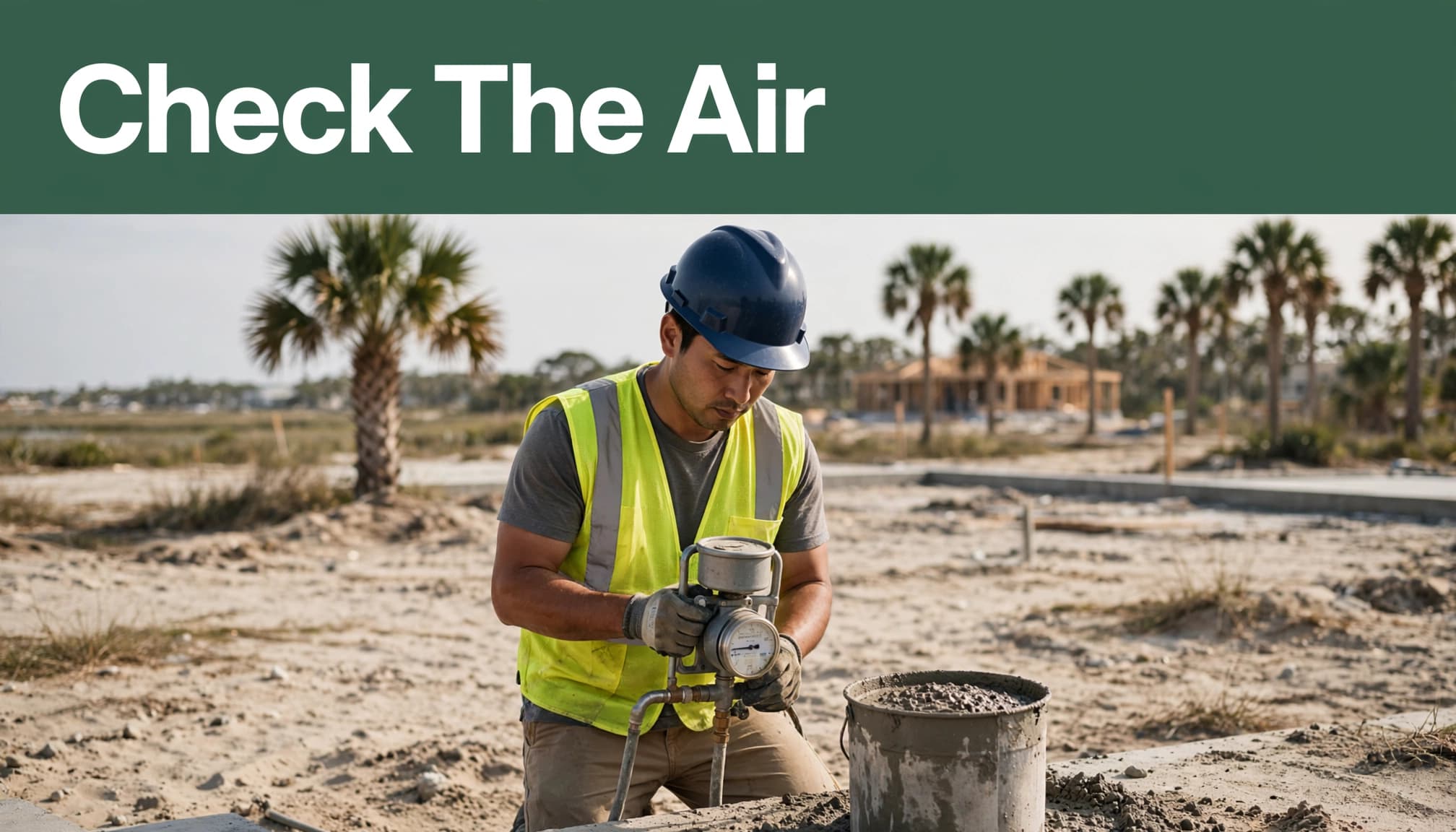
ASTM C231 measures fresh-concrete air content with a pressure meter. The technician fills and consolidates a sample in the meter bowl, seals it, applies pressure, and reads the result. Where required, an aggregate correction factor accounts for air associated with the aggregate.
This method works with relatively dense aggregates for which that correction can be determined. It isn’t suitable for every mix. The ASTM C231 pressure-method summary explains its role in checking normal-weight concrete.
ASTM C173: The volumetric method
ASTM C173 measures air by displacing it in a vessel containing water. It can be used with concrete containing any type of aggregate, making it useful when lightweight or highly porous aggregate rules out the pressure method.
The technician must follow the method’s filling, rolling, and reading procedure. Simply switching meters without checking the mix won’t make a questionable result reliable.
For tabby concrete in Charleston, the distinction matters. Visible oyster shells in a finish don’t, by themselves, identify the aggregate used throughout the concrete. The actual mix determines the appropriate test.
How testing fits into pour day
Air testing happens while the concrete is fresh, early enough for the crew to respond to a result outside the specification. The technician takes a representative sample, uses the method suited to the mix, and records the reading. Project requirements determine the sampling and acceptance plan.

A useful field record connects the result to the delivery ticket, sample location, test method, and specified range. That way, the owner and contractor can identify which concrete a reading describes. On a larger placement, one result shouldn’t be treated as a record of every load unless the testing plan says so.
If a result falls outside the approved range, the crew should follow the project specification and involve the responsible testing professional or design team as needed. Adding water or admixture by guesswork can change other properties of the mix. Retesting and acceptance decisions need a clear record.
Air content is only one fresh-concrete check. Depending on the job, the testing plan may also call for temperature, slump, and samples for later compressive-strength tests. For a concrete slab installation in Charleston, those results still need to sit alongside the crew’s checks of forms, base, reinforcement, and drainage.
What Charleston’s coastal exposure changes
Charleston’s humidity, heavy rain, and marine salt exposure deserve attention, but none sets a universal air-content target. The mix specification should reflect where the concrete goes and what conditions it will encounter.
Freezing and thawing require an exposure decision
Entrained air is most closely tied to protecting saturated concrete during freezing and thawing. Charleston has milder winters than many northern locations, yet occasional cold weather and persistent wet areas can still affect an exposed slab.
The Federal Highway Administration’s air-entrainment brief discusses the relationship between air content and concrete durability. For a specific project, the designer or approved mix specification should establish whether air entrainment is required and what range applies.
A coastal address is a reason to review exposure, not a substitute for a project-specific mix specification.
Salt and standing water need other defenses
Entrained air doesn’t stop chlorides from reaching reinforcing steel. Nor can a good meter reading correct a low spot that holds water after every storm. Salt-bearing moisture can enter through cracks and poorly protected areas, so drainage and sound concrete remain important.
A Charleston driveway that stays wet along its edges needs a plan for runoff. Pool decks need suitable slope and a finish that works around bare feet and splash water. Curing and any planned sealer must also suit the surface. Air testing supports those decisions; it doesn’t replace them.
Where the test matters across Lowcountry projects
The same field method can serve different projects, but the acceptance range must come from each project’s requirements. The crew should review the approved mix and the use of the slab before ordering concrete.
Driveways, patios, and pool decks
For a concrete driveway in Charleston, SC, tire traffic, runoff, and wet edges are practical concerns. Air testing can verify a specified fresh-mix property, while base preparation and slope address problems the meter cannot see.
A stamped concrete patio in Charleston brings another concern: finishing. Its pattern and color need a consistent mix and careful timing. On pool deck concrete in Charleston, repeated splash and cleaning make drainage, surface texture, and curing especially important. If either project calls for an air-entrained mix, the field result should be checked against its approved range before the finish work takes over.
Slabs and decorative tabby finishes
A slab for an addition, a commercial walkway, and an exposed tabby surface don’t automatically need the same air content. An interior slab may have different exposure requirements from exterior flatwork. A tabby finish also calls for attention to shell appearance and weather protection during placement.
Gorilla Concrete’s residential and commercial concrete work in Charleston includes these varied surfaces. For each one, the useful question is whether the specified mix, test method, and site preparation match the actual job.
Questions to settle with your contractor before the truck arrives
Ask a concrete contractor in Charleston, SC, for the proposed mix and whether its specification calls for entrained air. If it does, ask who set the acceptable range, which test method fits the aggregate, and who will record the field results. Those answers should be clear before placement starts.
Next, discuss what happens if a reading misses the range. The crew and testing professional need a process for documenting the result and deciding whether the load can be used. That conversation is harder once concrete is already spread across the forms.
Finally, walk the site. A Lowcountry concrete contractor should be able to explain where rainwater will go, how the base will be prepared, and how the new surface will be protected while it cures. For related planning topics, Gorilla Concrete’s Charleston concrete advice for homeowners covers the decisions surrounding a pour.
If you’re planning a driveway, patio, pool deck, or slab, Get a Free Quote to discuss the site and the work you have in mind.
Frequently Asked Questions
Does every Charleston concrete pour need entrained air?
No single air-entrainment rule follows from a Charleston address. Exterior exposure, the concrete’s use, and the project specification determine whether it’s required. Ask for the approved mix requirements rather than assuming a percentage based on proximity to the coast.
Can an air test prove a driveway will last?
No. It verifies the air content of the fresh sample tested. Long-term performance also depends on the mix, subgrade, drainage, placement, finishing, curing, and maintenance. A passing result can’t undo poor site preparation or water that routinely pools on the slab.
When should a homeowner ask about testing?
Raise it while reviewing the quote and proposed mix, before scheduling delivery. That leaves time to confirm whether air content is specified, choose an appropriate test method, and arrange who will perform the check. On pour day, ask how the result will be recorded and handled if it’s outside the approved range.
Conclusion
A smooth new surface can’t tell you whether its fresh mix met the air-content specification. Testing before placement gives the crew a chance to check that property while the result can still inform a decision.
For coastal concrete, keep the reading in perspective. The right mix, a prepared base, reliable drainage, and careful curing all have work to do after the meter is put away.