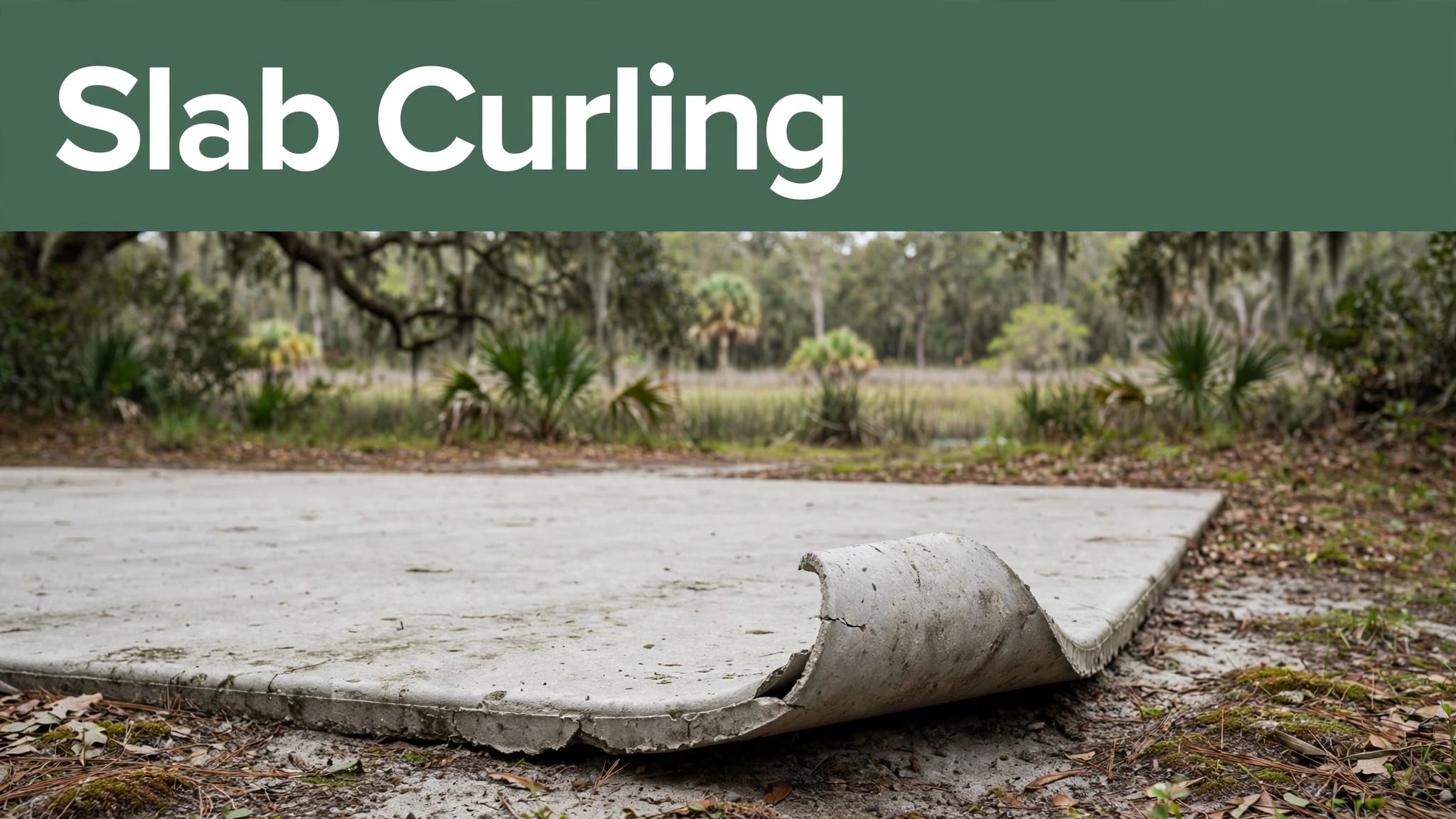
A raised corner on your driveway can look like the whole slab is coming loose. Sometimes the problem is concrete slab curling: the edges or corners bend upward because the top and bottom of the concrete change at different rates.
That distinction matters. Curling, settlement, and soil washout can leave similar-looking lips, but they call for different fixes. Before you repair an uneven slab in Charleston, it helps to know what you’re seeing and how a well-planned pour reduces the risk.
Key Takeaways
- Curling usually starts when one face of a slab dries or changes temperature faster than the other.
- Moisture control, a suitable mix, and a planned joint layout can reduce curling risk. Curing alone cannot guarantee a flat slab.
- A raised edge beside a void, widening crack, or changing slope needs an on-site assessment before repair.
- In the Lowcountry, drainage and stable support matter too, even though settlement and curling are different problems.
What concrete slab curling looks like
Curling bends a slab panel near a free edge, corner, joint, or crack. You might notice a corner that sits slightly above the adjoining panel or an edge that no longer rests evenly on its base. The National Ready Mixed Concrete Association’s guidance on slab curling describes this distortion as a result of differences in moisture or temperature through the slab.
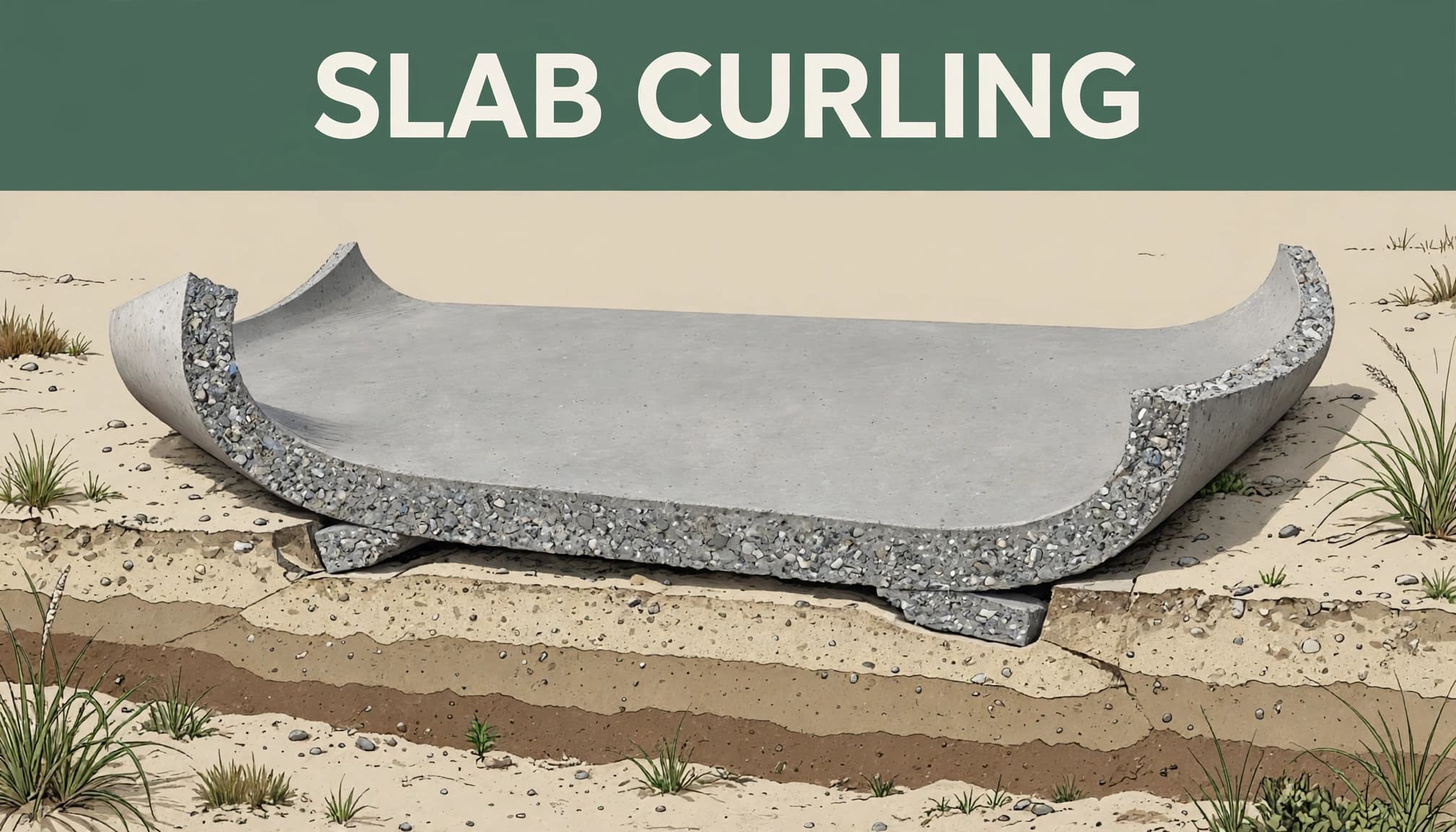
The shape offers a clue, but it isn’t a diagnosis. If one panel has dropped while its neighbor remains level, settlement may be the main issue. If soil has washed away at the edge, missing support deserves attention. A crack can also change how a panel moves.
Look at the slab from several angles. Note whether the height difference follows a joint, whether the panel rocks under use, and whether the gap changes after rain. Those observations give a concrete contractor in Charleston, SC, a better starting point than a photo of the raised corner alone.
Why a concrete slab curls
Uneven drying creates a moisture difference
As concrete dries, it shrinks. On a slab resting over damp ground, the exposed top may lose moisture faster than the underside. The upper portion then tries to shorten more, which can pull edges and corners upward. The National Research Council’s explanation of slab curling identifies this uneven shrinkage as a basic cause.
An under-slab vapor barrier can limit moisture entering an enclosed floor from below. However, it can also change how the slab dries because more moisture leaves through the exposed top. That doesn’t mean a required barrier should be removed. Its placement and the concrete design need to be considered together.
Temperature and construction choices add stress
A temperature difference through the slab can also bend it. Sun on one section, shade on another, or a rapid change in surface temperature may affect how panels behave. Temperature-related movement can differ from the upward curl associated with top-surface drying.
Mix and layout matter as well. Extra mixing water can increase drying shrinkage. Long, uninterrupted panels leave more room for visible distortion, while thin edges have less weight to resist lifting. Reinforcement may help hold cracks together, but it doesn’t stop concrete from shrinking or replace a sound joint plan.
What Charleston conditions change, and what they don’t
Charleston’s humid air can slow evaporation, yet a sunny, windy afternoon can dry exposed concrete unevenly. Rain can interrupt finishing or affect an unprotected surface. Crews need to respond to the conditions at the pour, not assume coastal humidity will keep fresh concrete moist.
Ground conditions also vary across the Lowcountry. One site may have firm, well-drained support; another may have soft fill, persistent runoff, or an area that stays wet beside a downspout. Curling comes from differences within the slab, while a weak or eroding base can cause settlement beneath it. Both can occur on the same project, so neither should be guessed from the location alone.
On a concrete driveway in Charleston, SC, check how water moves near the garage opening and street apron. For pool deck concrete in Charleston, inspect drains and the connection to coping. Standing water at either edge needs a drainage solution, even if the raised corner also shows signs of curling.
Plan the slab before the truck arrives
Match the mix and support to the job
A garage floor, vehicle pad, and pedestrian patio face different loads and moisture conditions. Before concrete slab installation in Charleston, the crew should identify soft spots, prepare the subgrade, and plan a stable base. Grading must also keep runoff from repeatedly saturating the edges or flowing toward a building.
The concrete mix should suit the use without more water than needed for placement. Thickness, reinforcement, and any under-slab moisture control belong in the project plan. A thicker slab may resist curling better in some designs, but thickness cannot make up for poor support.
For a conditioned interior floor, the moisture-control requirements of the planned flooring matter. Removing a vapor barrier simply to reduce curling risk could create a different and costly moisture problem.
Give joints a deliberate layout
Control joints guide shrinkage cracks to planned lines. They can also limit the size of panels that might curl. NRMCA’s slab-curling guidance recommends joint spacing no greater than 24 times the slab thickness to help minimize curling. For a 4-inch slab, that works out to 8 feet; the final layout still depends on the design.
A Lowcountry concrete contractor should show where joints meet garage openings, property edges, curves, and existing concrete. Isolation joints have a different job: they separate a slab from fixed elements such as walls, columns, steps, and pool coping.
That planning applies to plain flatwork and a stamped concrete patio in Charleston. Decorative patterns should work around necessary joints, not hide a poorly divided slab. Gorilla Concrete’s driveway, patio, and slab services cover these different uses, each of which needs a layout suited to the site.
Control moisture during placement and curing
Finish without adding water to the surface
The crew needs enough time to place, strike off, bull-float, edge, and finish the concrete. Working water into the top to make finishing easier can leave a weaker surface and add to shrinkage concerns. Finishing should wait until surface bleed water has cleared rather than sealing it beneath the finish.
Joint timing matters too. Saw cuts should follow the planned layout once the concrete can support cutting without torn edges. Wait too long, and shrinkage cracks may appear before the intended joints are in place. Reinforcement must also stay at its specified position during placement; wire or steel left on the ground won’t perform as designed.
Protect the slab after finishing
A curing plan limits early moisture loss while concrete gains strength. The method must suit the finish and the weather. A decorative surface may require different product choices than a broom-finished driveway, so the crew should confirm compatibility before placement.
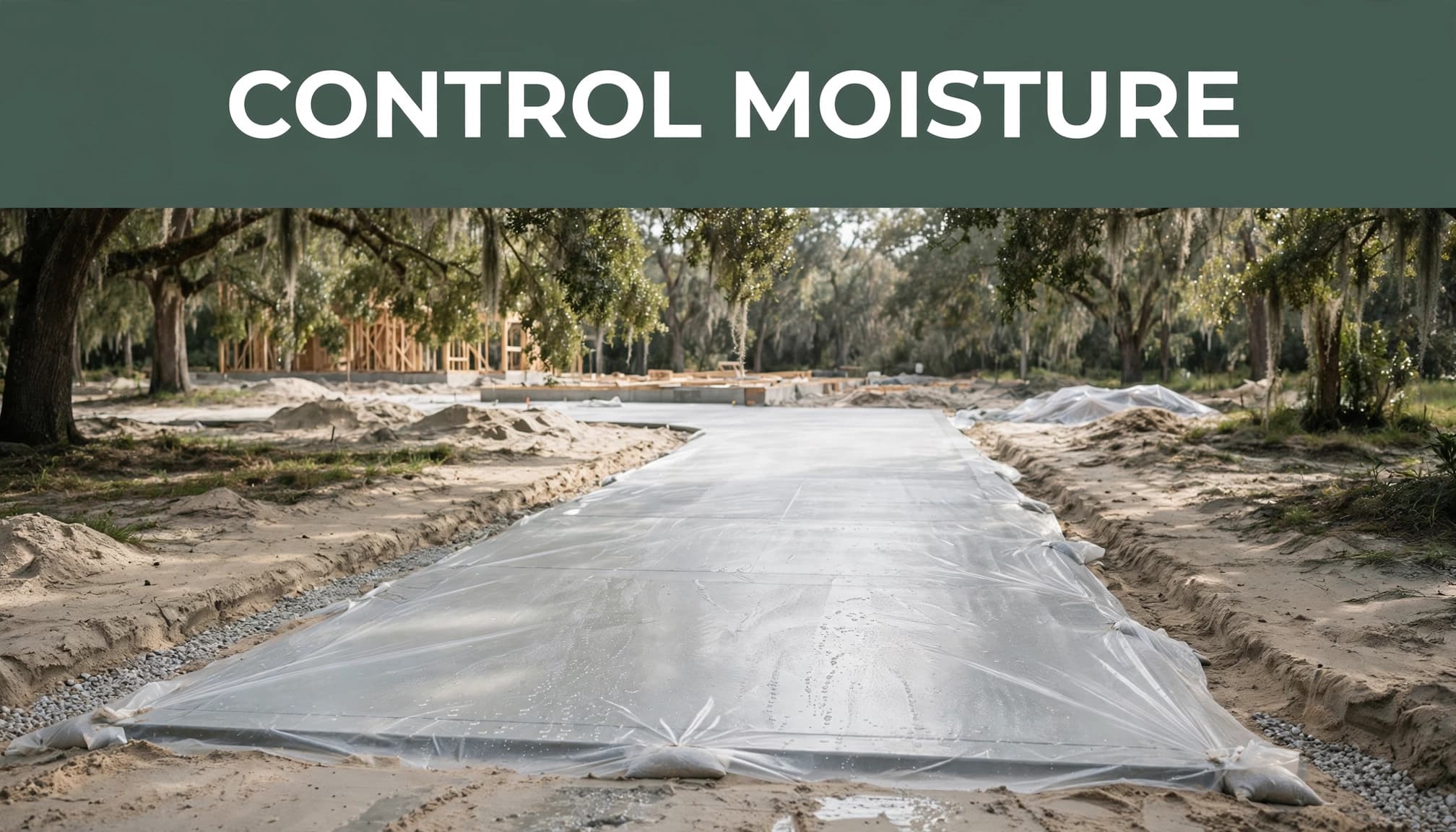
Curing helps control early drying, but a slab may still curl after curing ends if its top and bottom dry at different rates.
That limit is important. The technical guidance on curling of slabs ties curling to bending at edges and corners caused by differences through the concrete. Effective curing reduces one source of early stress; mix design, panel size, and site conditions remain part of the answer.
Keep traffic off the new work until the contractor approves its use. Also keep sprinklers and runoff from washing soil against fresh edges or disturbing an unfinished surface.
Decide whether a curled slab needs repair
Separate appearance from a safety problem
A small, stable edge lift may be mainly visual. A lip on a busy sidewalk, driveway approach, or commercial entrance deserves faster attention because people can trip and wheels can strike the joint. Check whether the height difference is growing and whether cracks or loose corners have appeared.
Don’t grind a raised edge before finding out why it moved. Grinding removes concrete and may change drainage or leave too little material at the edge. Likewise, filling a gap beneath a panel won’t correct an active runoff problem.
Ask what is moving beneath the concrete
An inspection should check the joint, slab surface, adjoining grade, and support below the edge. If a panel rocks, sounds hollow, or has a visible void, settlement or washout may be involved. Deep cracks, repeated movement, or water running toward a building can make removal and replacement more sensible than a surface repair.
The finish matters, but it comes after the diagnosis. On stamped concrete or traditional tabby concrete in Charleston, a repair may be hard to blend with the surrounding texture. A contractor should explain both the structural fix and the likely appearance before work begins.
If you’re planning new flatwork or need an uneven slab assessed, Get a Free Quote for a site-specific recommendation.
Frequently Asked Questions
Does every raised slab corner mean curling? No. Settlement, missing base material, roots, and movement at a joint can also create a height difference. The pattern, support, and drainage need to be checked before choosing a repair.
Will control joints prevent curling? They can reduce the size of panels and help direct shrinkage cracks, but they don’t eliminate moisture or temperature differences through the slab. Joint depth, spacing, and cutting time also matter.
Can Charleston’s humidity prevent a new slab from drying too fast? Humidity may slow evaporation, but wind and direct sun can still dry an exposed surface. The crew should follow a curing plan suited to the conditions during and after the pour.
The bottom line for Charleston slabs
That raised corner is a reason to look closer, not an automatic sign that the entire slab has failed. Identify the cause first: curling, settlement, and washout require different responses.
For new work, the strongest prevention plan begins before placement. Stable support, drainage, a suitable mix, planned joints, careful finishing, and curing all help a slab stay serviceable through Lowcountry weather.