
An existing oak can make a backyard feel established, but it can also complicate a new patio. Tree roots need air, water, and room to grow, while concrete needs stable, well-drained soil beneath it. Yes, you can install a concrete patio around trees, but the slab should never cover major roots or run tightly against the trunk. The safest plan protects the tree first, then shapes the patio around its root zone.
Key Takeaways
- Concrete can be installed near existing trees when the layout leaves adequate space around the trunk and roots.
- Pouring directly over large roots can damage the tree and lead to cracking, lifting, and slab settlement.
- A professional site plan should address root protection, drainage, soil preparation, access, and future tree growth.
- Pavers, a raised walkway, or a tree well may work better than one continuous slab in tight areas.
- Charleston homeowners should choose a contractor familiar with Lowcountry soil, rainfall, humidity, and mature trees.
Concrete Can Go Around a Tree, But Not Over Its Roots
The biggest mistake is treating the visible trunk as the full size of the tree. A mature live oak, loblolly pine, or red maple can have important roots spread well beyond the canopy. Many of those roots sit close to the soil surface, where they take in oxygen and moisture.
When concrete covers that area, the soil receives less air and water. Root growth can slow, and the tree may show stress later. The slab can also fail as roots expand, shift, or lose stable soil beneath the concrete.
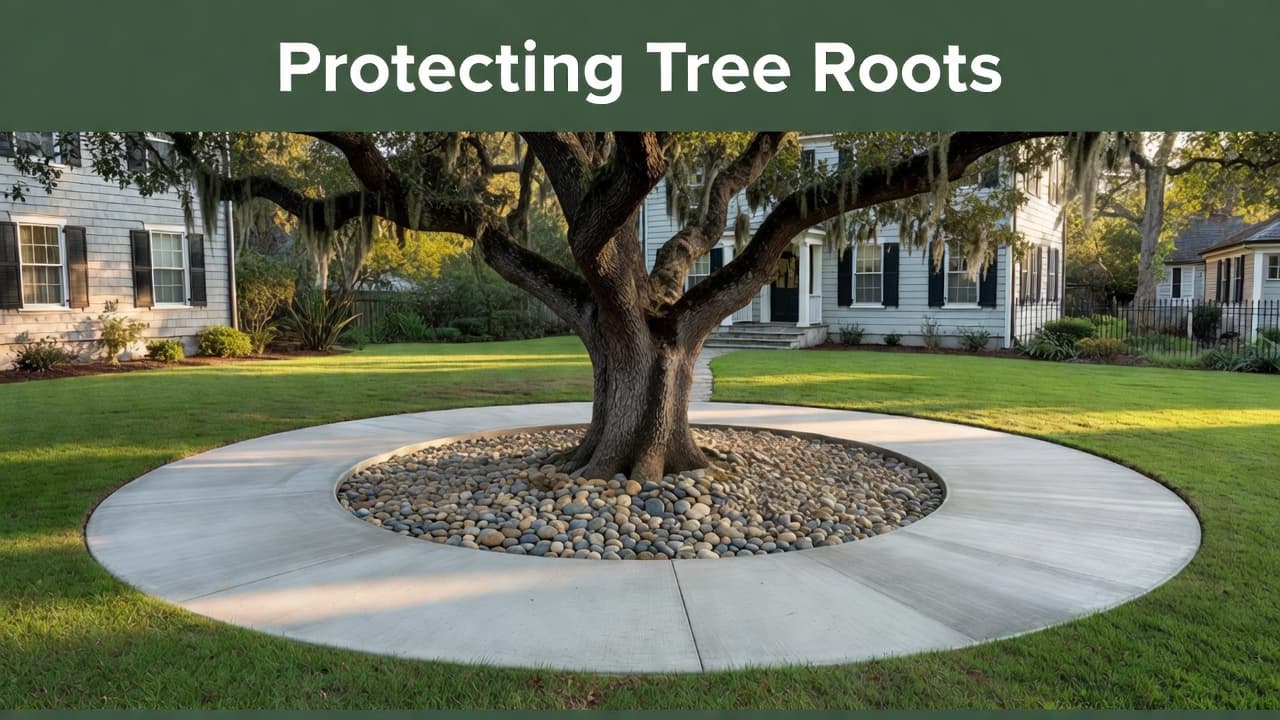
A tree trunk needs room as it grows, too. Leaving a small opening that fits the trunk today may create a maintenance problem within a few years. A tree well with a generous, rounded edge gives the trunk room and keeps the concrete from pressing against the bark.
A three-foot separation from the trunk is a useful starting point for many patio designs, but it isn’t a universal rule. Tree age, species, trunk diameter, grade changes, and visible roots all affect the proper distance. A certified arborist can assess the tree before excavation begins. An arborist discussion of patios near large trees also shows why roots near a proposed slab deserve careful review.
A good layout keeps heavy equipment, formwork, and excavation away from the tree’s critical root zone. One common way to estimate that zone is to measure the trunk diameter at 4.5 feet above the ground, then allow about 1.5 feet of protection for each inch of diameter. This is a planning guide, not a substitute for an arborist’s assessment.
Never cut large roots simply to make a straight patio edge. If excavation exposes a major root, stop and adjust the design. A curved patio edge often costs less than repairing a damaged tree or replacing a cracked slab.
Plan the Patio Before Excavation Starts
Tree protection begins during design, not after the concrete truck arrives. Walk the proposed patio area with the contractor and mark each tree, visible root, low spot, downspout, utility line, and equipment access route.
The patio may need to bend around the tree rather than follow a perfect rectangle. That change can improve the finished appearance while preserving the root zone. A wider opening can hold mulch, river stone, groundcover, or a low border that separates planting space from the slab.
Use these steps during the planning process:
- Identify the trees worth preserving. Mature shade trees often have greater root protection needs than small ornamental trees. Have an arborist inspect trees that show decay, leaning, exposed roots, or large surface roots.
- Mark a no-work zone. Use temporary fencing or sturdy guards around the protected area. Keep trucks, compactors, concrete washout, fuel, and stored materials outside that boundary.
- Test the proposed grade. Don’t add soil over roots or lower the grade enough to expose them. Both changes can stress the tree and alter how water moves through the yard.
- Choose the right surface system. A conventional slab may work outside the root zone. Near active roots, permeable pavers, a segmented patio, or a raised platform may reduce excavation and compaction.
Root barriers can help in some designs, especially when the patio must run near a tree and the root direction is predictable. They don’t make it safe to cut large roots or bury the trunk. A barrier’s depth, placement, and distance from the tree should come from the site plan. This root barrier installation video shows one approach, but local soil and tree conditions still determine whether that method fits a Charleston property.
A raised boardwalk can be another solution. It keeps the walking surface above the soil and can cross a root area with less digging than a slab. For a small seating area, pavers over a carefully prepared base may also allow easier future repairs than one continuous pour.
Homeowners comparing professional concrete patio services in Charleston can ask whether the contractor handles tree-adjacent work, protects root zones, and coordinates with an arborist when needed.
Charleston Conditions Make Drainage and Base Work Important
Charleston yards often deal with heavy rain, humid summers, warm temperatures, and soils that can hold moisture. These conditions make drainage part of the patio design, especially when roots already influence the soil structure.
A concrete contractor should remove unstable material only where the tree protection plan allows. The remaining soil needs proper compaction without heavy machinery crossing the root zone. A typical patio base may include compacted crushed stone, but the exact depth depends on soil, slope, loads, and site conditions.
Water should drain away from the house and move toward an approved outlet. The design may need a swale, channel drain, perforated pipe, or another drainage feature. Place drainage work outside major roots whenever possible. A patio that holds water against the tree can create a different problem than a patio that stays too dry.
The concrete itself also needs well-planned joints. Control joints give the slab designated places to form small cracks as it changes temperature and moisture. Joint locations should work with the tree opening, corners, steps, and changes in patio width. A circular tree well should have a clean, stable edge rather than a narrow strip of concrete that can break away.
Construction crews should protect exposed roots if excavation is unavoidable. Large roots shouldn’t be chopped with an excavator bucket. If roots remain exposed, cover them with moist mulch and backfill promptly. Foot traffic and plywood access routes are safer than repeated equipment travel across the root zone.
Good concrete slab installation in Charleston depends on more than the mix design. Site preparation, drainage, reinforcement where appropriate, finishing, curing, and joint placement all affect performance. A contractor who understands Charleston-area conditions can spot grading and access problems before they become expensive repairs.
The same preparation matters beyond patios. A concrete driveway in Charleston, SC may pass near mature street trees, while pool deck concrete in Charleston can border palms, oaks, or planted areas. Each project needs its own root and drainage plan.
Select a Finish That Works With the Tree Layout
A tree-friendly patio doesn’t have to look plain. The opening around the trunk can become a deliberate design feature, and the surface can match the home’s architecture.
A smooth or broom-finished slab offers a simple appearance and keeps the tree well easy to maintain. Stamped concrete can create the appearance of slate, brick, cobblestone, or wood plank without adding separate paver joints across the entire patio. For a stamped concrete patio in Charleston, the pattern should stop cleanly at the tree opening and align with control joints.
Color can also help define the planting area. Earth-tone concrete paired with dark mulch or natural stone creates a clear border without competing with the tree. The finish should remain slip-resistant, especially on patios that receive shade, rain, or irrigation.
Some Charleston homeowners may prefer tabby concrete, which uses oyster-shell aggregate associated with the Lowcountry’s coastal building tradition. Tabby concrete in Charleston can give a patio a strong local character, but it still needs the same root clearance, base preparation, joints, and drainage as other concrete finishes.
When a continuous slab doesn’t fit the root zone, compare these options:
| Patio option | Best fit | Main consideration |
|---|---|---|
| Poured concrete with tree well | Open areas outside major roots | Requires careful excavation and joint planning |
| Permeable pavers | Areas where water and future access matter | Needs a stable, well-drained base |
| Raised walkway or platform | Root-heavy areas with limited excavation space | Requires structural support and thoughtful transitions |
| Separate seating pad | Small outdoor living areas | Creates less disturbance than a large slab |
A local Lowcountry concrete contractor can help compare these options based on access, soil, tree size, drainage, and the way you plan to use the patio. Ask for a written plan that shows the tree opening, finished elevations, drainage route, base preparation, and protection measures.
If the patio will support furniture, an outdoor kitchen, steps, or a roof structure, mention those loads before the design is finalized. A basic walking surface and a structure-supported slab may require different preparation.
Watch the Tree and Patio After Installation
Tree protection doesn’t end when the concrete cures. Keep mulch, soil, and irrigation directed toward the tree without covering the trunk. Don’t pile materials or place planters where they trap water against the concrete edge.
Inspect the patio after major rain and during the first hot season. Look for standing water, widening joints, lifted edges, or a gap that is closing around the trunk. Watch the tree for thinning foliage, dead branches, or canopy dieback. Root damage can appear well after construction, so early changes deserve attention from an arborist.
Avoid applying chemical root killers near the patio. They can harm the tree and don’t solve the underlying design problem. If roots eventually reach the slab, repair may involve lifting a section, widening the tree well, replacing nearby pavers, or changing the drainage path.
For a project with tight access or mature roots, a site visit is more useful than a quick square-foot estimate. The patio size, demolition, root protection, drainage, finish, and access all affect the price. Homeowners and businesses can Get a Free Quote after the site conditions are reviewed.
Conclusion
A concrete patio can fit beautifully around an existing tree when the design leaves room for roots, trunk growth, and proper drainage. The safest approach keeps concrete away from major roots, protects the work zone, and adjusts the patio shape instead of forcing a straight edge.
Charleston homeowners should treat the tree and slab as one site-planning decision. With the right layout, base preparation, finish, and follow-up care, a shaded oak or other mature tree can remain the centerpiece of the patio rather than the reason it fails.