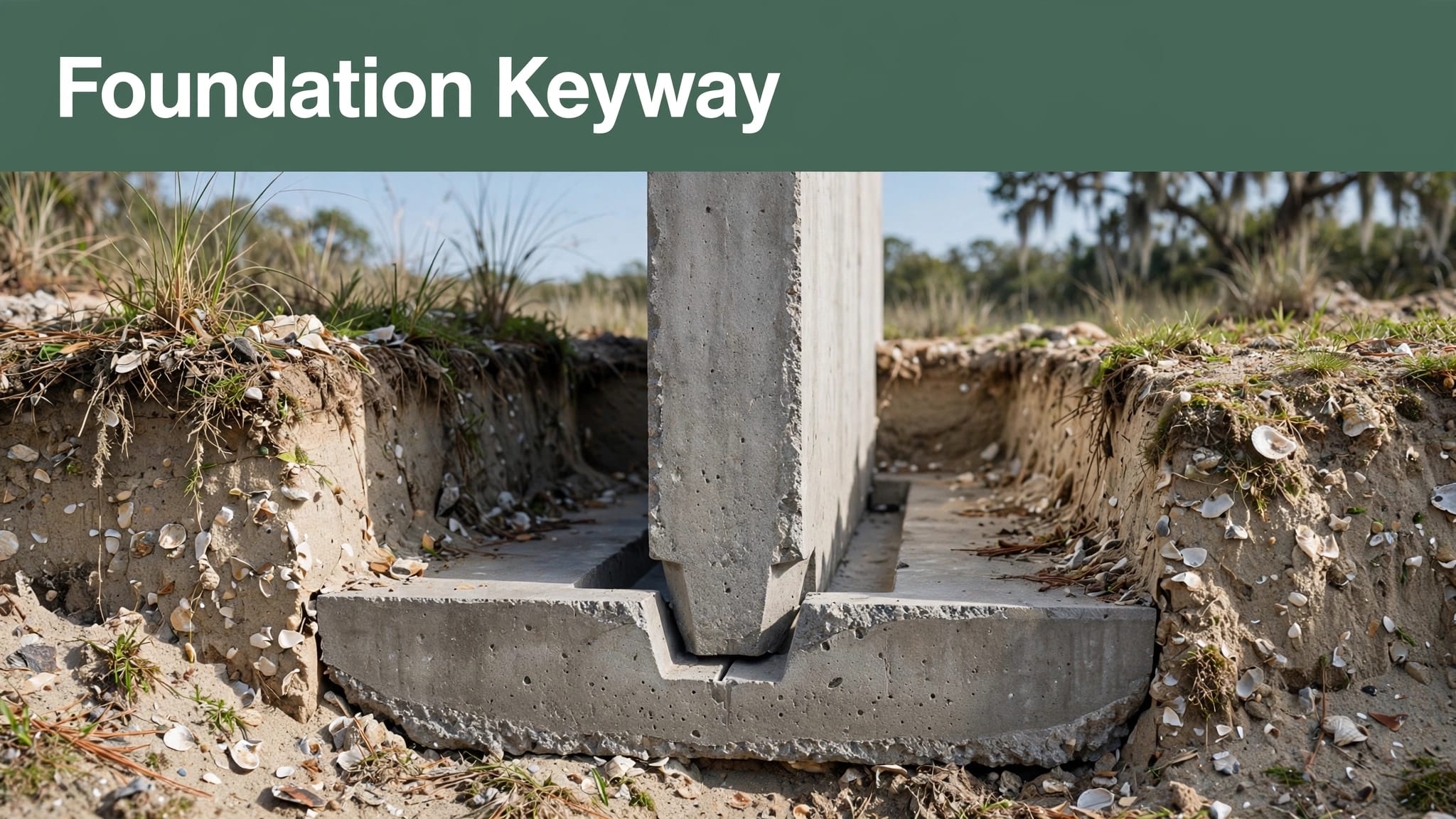
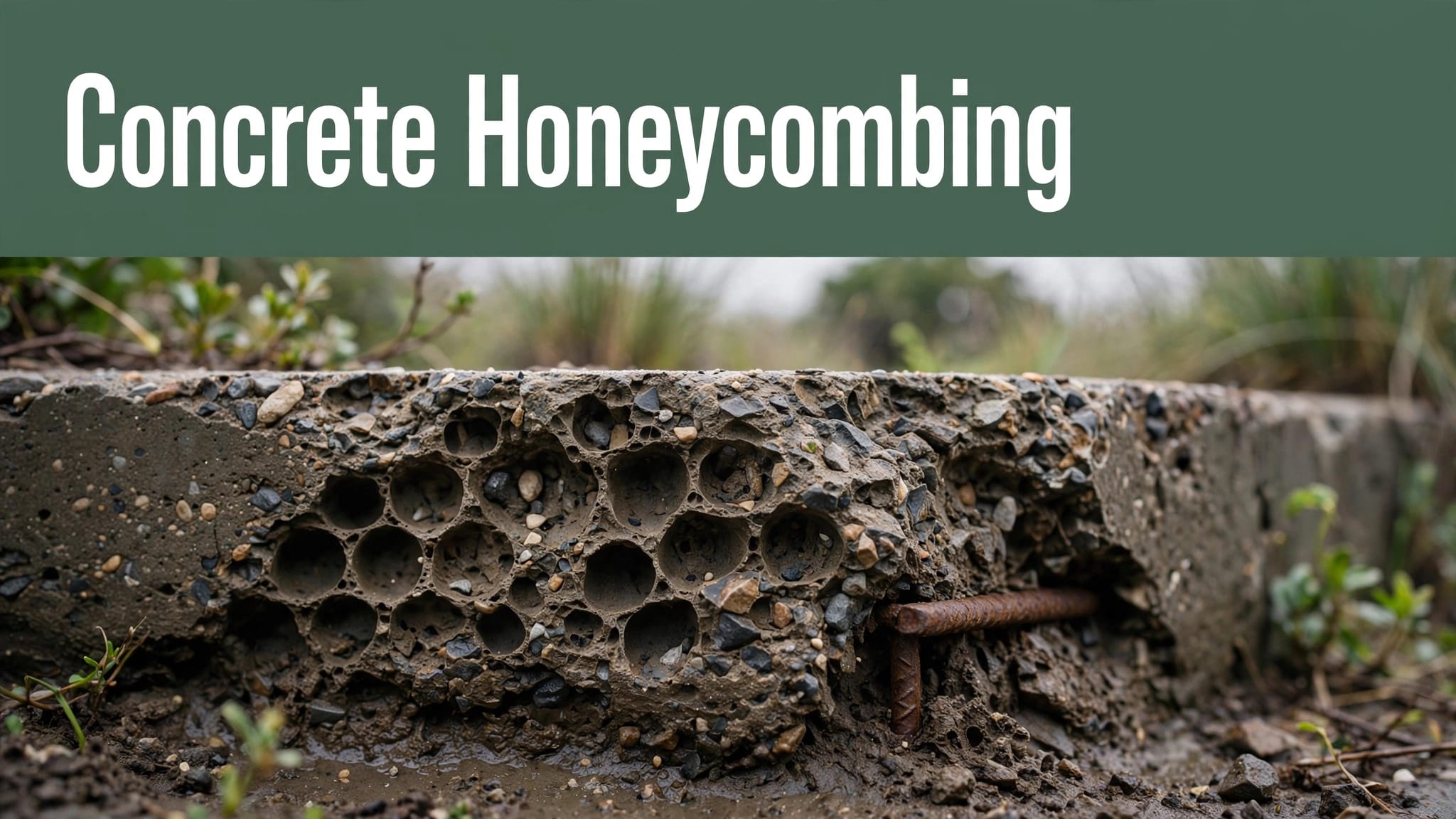
Small voids in a foundation can look like a surface problem, yet they may point to poor concrete placement below the finished face. Concrete honeycombing deserves a close look before moisture, corrosion, or more extensive deterioration takes hold.
Charleston homes face heavy rain, damp soil, coastal humidity, and salt exposure. Those conditions don’t cause honeycombing during the pour, but they can make an unfinished or poorly repaired area fail sooner. The right response starts with identifying how deep the defect goes.
Key Takeaways
- Concrete honeycombing leaves pockets, rough aggregate, and missing mortar on a wall, footing, pier, or slab edge.
- Inadequate consolidation, congested reinforcement, stiff concrete, segregated mix, and leaking forms are common causes.
- A shallow, isolated defect may accept a professional repair. Deep voids, exposed steel, cracking, or movement require a more careful review.
- Charleston drainage matters after the repair. Water against a foundation can worsen corrosion and soften supporting soil.
- A reliable repair removes weak concrete first. Filling holes over loose material only hides the problem temporarily.
Honeycombing isn’t judged by appearance alone. Its depth, location, reinforcement coverage, and connection to water exposure determine the repair scope.
What Concrete Honeycombing Looks Like
Honeycombing happens when cement paste and fine aggregate fail to fill the space around coarse aggregate. Instead of a dense, continuous surface, the concrete has cavities and visible stone.
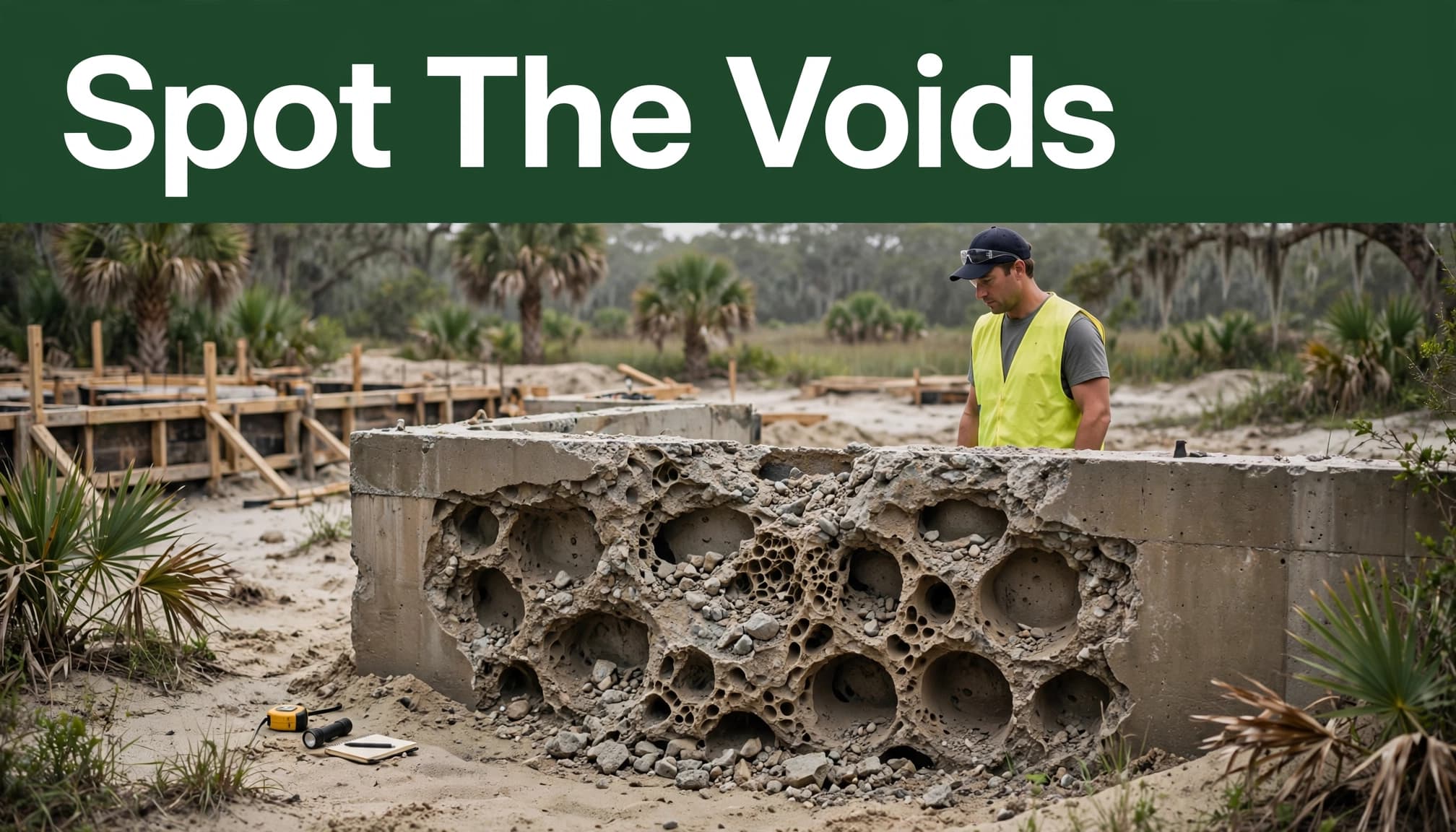
Surface voids and exposed aggregate
Minor honeycombing may look like pinholes, shallow pockets, or a rough patch where aggregate shows through. It often appears at the bottom of walls, corners, narrow forms, and around reinforcement.
A few small surface voids don’t automatically mean the entire foundation is weak. However, the contractor should test whether the surrounding material is hard, bonded, and free of hollow areas.
When the defect goes deeper
Larger cavities can leave reinforcing steel without adequate concrete cover. That matters in the Lowcountry because damp air, wind-driven rain, and salt exposure can speed up corrosion when steel is accessible.
Cracks near the void, rust staining, loose aggregate, water entry, or a foundation wall that sounds hollow during tapping all raise the concern level. A plain-language overview of concrete honeycombing also identifies poor placement and compaction as central causes.
Why Concrete Honeycombing Happens
Honeycombing starts during placement, not years later. The defect usually shows where fresh concrete could not move, settle, and consolidate into a dense mass.
Incomplete vibration and consolidation
Workers use internal vibration to help fresh concrete settle around reinforcement and into form corners. Too little consolidation leaves trapped air and voids. Poorly timed vibration can also create weak areas.
Vibration must match the mix, form depth, and reinforcement layout. The ACI 309R guide for concrete consolidation describes consolidation as a planned placement practice, not a last-minute fix after concrete reaches the forms.
Congested steel, stiff mixes, and leaking forms
Tight rebar spacing can block large aggregate from moving through a wall or footing. A mix that is too stiff may not flow into corners, while a mix dropped too far can separate, leaving paste and stone unevenly distributed.
Leaking forms create another problem. Cement paste can escape through gaps, leaving coarse aggregate behind. Industry guidance on congested reinforced concrete placement shows why form design, placement sequence, and reinforcement spacing matter before the truck arrives.
Charleston Foundation Checks Before the Pour
Foundation work should be reviewed before concrete covers the conditions that matter most. Charleston County inspections commonly occur after excavation, forms, and required reinforcing steel are in place.
Verify forms, steel, and the bearing surface
The crew should check that forms are secure, joints are sealed, and reinforcement stays at the specified position during placement. They also need a stable, prepared bearing surface without loose soil, standing water, or washed-out edges.
For a new home, addition, garage, or workshop, the plans and approved details control footing size, reinforcement, and concrete requirements. A concrete slab installation Charleston project needs the same attention to base preparation, forms, moisture control, and planned joints.
Plan access and placement before concrete arrives
Concrete placement works better when truck access, crew positions, vibrator use, finishing tools, and weather protection are decided early. Delays can create cold joints or rushed placement, especially during Charleston’s hot, humid months.
A concrete contractor Charleston SC property owners hire should also account for runoff paths around the work area. Rainwater should not wash soil into open footings or collect beside a newly poured foundation. Review available Charleston concrete services when foundation work connects to slabs, flatwork, or site drainage.
How Professionals Repair Honeycombing
A proper repair restores sound material and protects reinforcement. The method depends on the defect’s depth, location, and whether the foundation has remained stable.

Assess the full extent first
The crew starts by locating loose concrete and checking for deeper cavities. They look at exposed rebar, nearby cracking, moisture entry, settlement, and the wall or footing’s role in carrying loads.
A small defect on a noncritical edge calls for a different response than voiding around steel in a load-bearing foundation wall. If the damage extends beyond the visible surface, the repair scope should reflect that condition.
Remove weak concrete and prepare the area
Loose, unsound material must come out until the repair reaches dense concrete. Exposed reinforcement needs cleaning and evaluation before new material covers it. The remaining substrate should be clean and prepared according to the selected repair system.
The repair material must suit the size and orientation of the void. Cementitious repair mortars, non-shrink grouts, and specified bonding systems all have different uses. A patch should never bridge unsupported aggregate or conceal active deterioration.
Place and cure compatible repair material
After preparation, the contractor places compatible repair material tightly against the sound concrete and around any approved reinforcement. The repair then needs curing that follows the selected product and project requirements.
Curing time varies by system, weather, and repair material. In Charleston heat, crews may need to protect fresh repairs from rapid moisture loss. The finished repair should also shed water rather than create a pocket against the foundation.
When to Call an Engineer or Contractor
A homeowner can photograph visible voids and watch for changes, but diagnosis should not stop at the surface. Foundation defects may connect to water intrusion, corrosion, or movement below grade.
Signs that need prompt evaluation
Call for an on-site assessment when honeycombing appears with exposed steel, horizontal or widening cracks, active water entry, foundation displacement, rust stains, or soil loss near the wall. Those signs may call for structural input before repair begins.
Settlement changes the decision. A mortar patch can restore a localized surface, but it can’t stabilize a footing that has lost support or correct a wall that has moved.
Ask for a clear repair scope
A dependable Lowcountry concrete contractor should explain the suspected cause, the area to be removed, material selection, curing needs, drainage concerns, and limits of the proposed repair. Request clarification if the recommendation only addresses the visible holes.
The same care applies to a concrete driveway Charleston SC repair or a foundation-adjacent slab. Water that runs toward a home can undermine both repairs. For a site assessment of residential or commercial concrete, Get a Free Quote.
Preventing Honeycombing on Future Charleston Projects
Preventing honeycombing depends on preparation and placement discipline. It begins with the forms and reinforcement, then continues until the concrete has consolidated and cured properly.
Match the mix and placement method to the work
Walls, footings, piers, slabs, and decorative surfaces each place differently. The crew should use a mix and aggregate size that can move around the specified steel without segregation. Forms must resist pressure and hold cement paste.
A pool deck concrete Charleston project also needs controlled placement because slope, drainage, and a safe finish affect the finished surface. Decorative details should never distract from a stable base and sound consolidation.
Keep water away after the work is complete
Gutters, downspouts, finished grade, and adjacent hardscape should move water away from the foundation. Standing water increases repeated wetting and can expose weak areas faster, particularly near slab edges and crawlspace walls.
A stamped concrete patio Charleston homeowners choose should slope away from the structure. The same rule applies to tabby concrete Charleston features, where oyster-shell character belongs on a well-prepared, well-drained surface. More Charleston concrete advice can help when coordinating drainage and flatwork around a home.
Frequently Asked Questions
Is honeycombing always a structural problem?
No. Small, shallow voids may be cosmetic if the surrounding concrete is dense and sound. Still, deep pockets, exposed reinforcement, cracking, or movement need professional evaluation before a repair decision.
Can honeycombing be repaired with ordinary patching concrete?
A repair product must match the defect and placement conditions. Shallow repairs may use one material, while deeper voids around steel or in vertical foundation faces may need a specified repair mortar or grout.
Will a sealer fix honeycombed concrete?
A sealer may limit water absorption on clean, sound concrete. It doesn’t replace missing material, restore reinforcement cover, or correct loose concrete and foundation movement.
A Sound Repair Starts Below the Surface
Concrete honeycombing is manageable when the repair reaches sound material and addresses water exposure around the foundation. Covering voids without checking their depth can leave corrosion and weakness hidden behind a fresh patch.
Charleston foundations need careful placement, stable support, and drainage that keeps water moving away from the structure. A repair that fixes the cause has a far better chance of lasting.