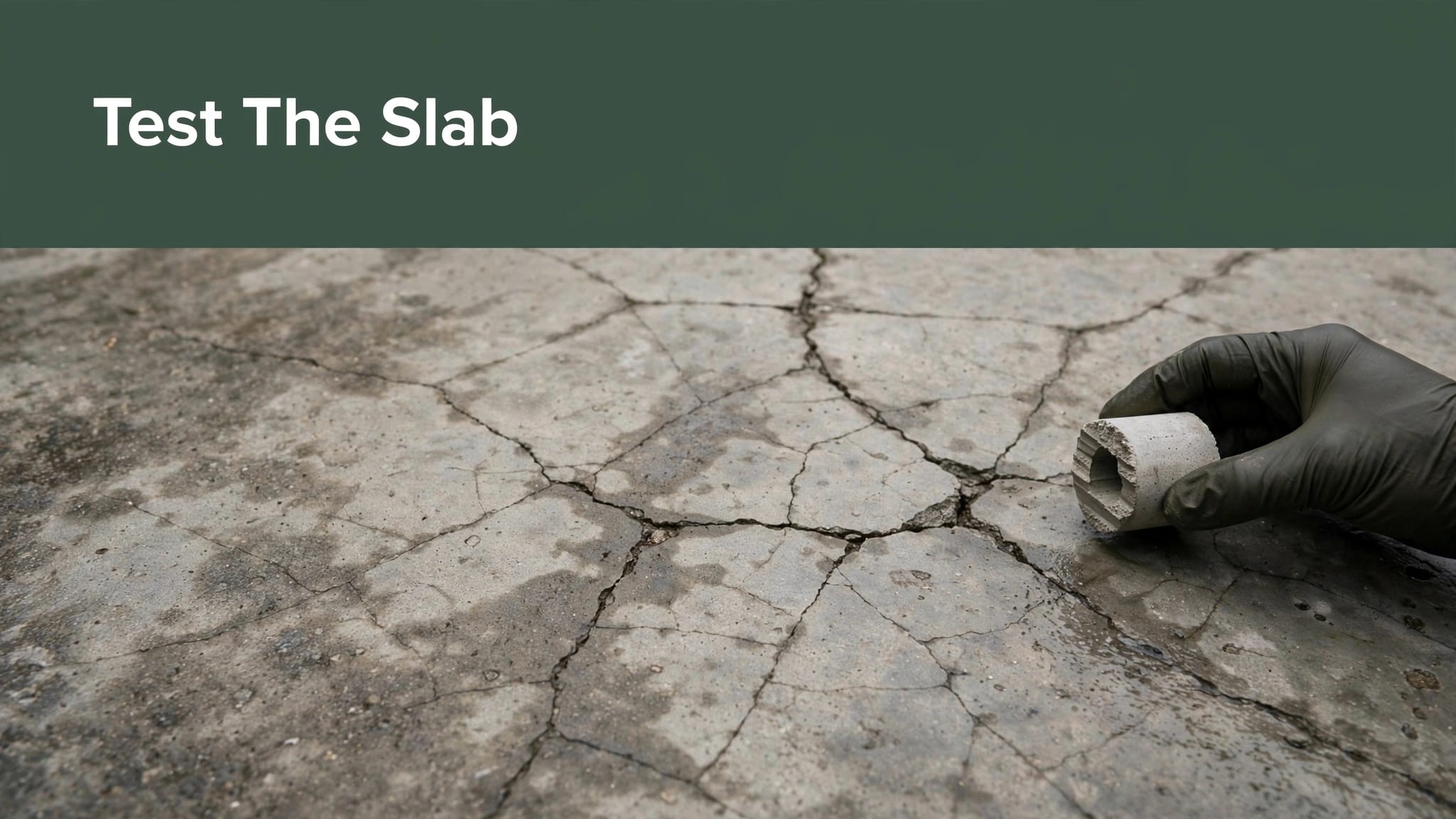
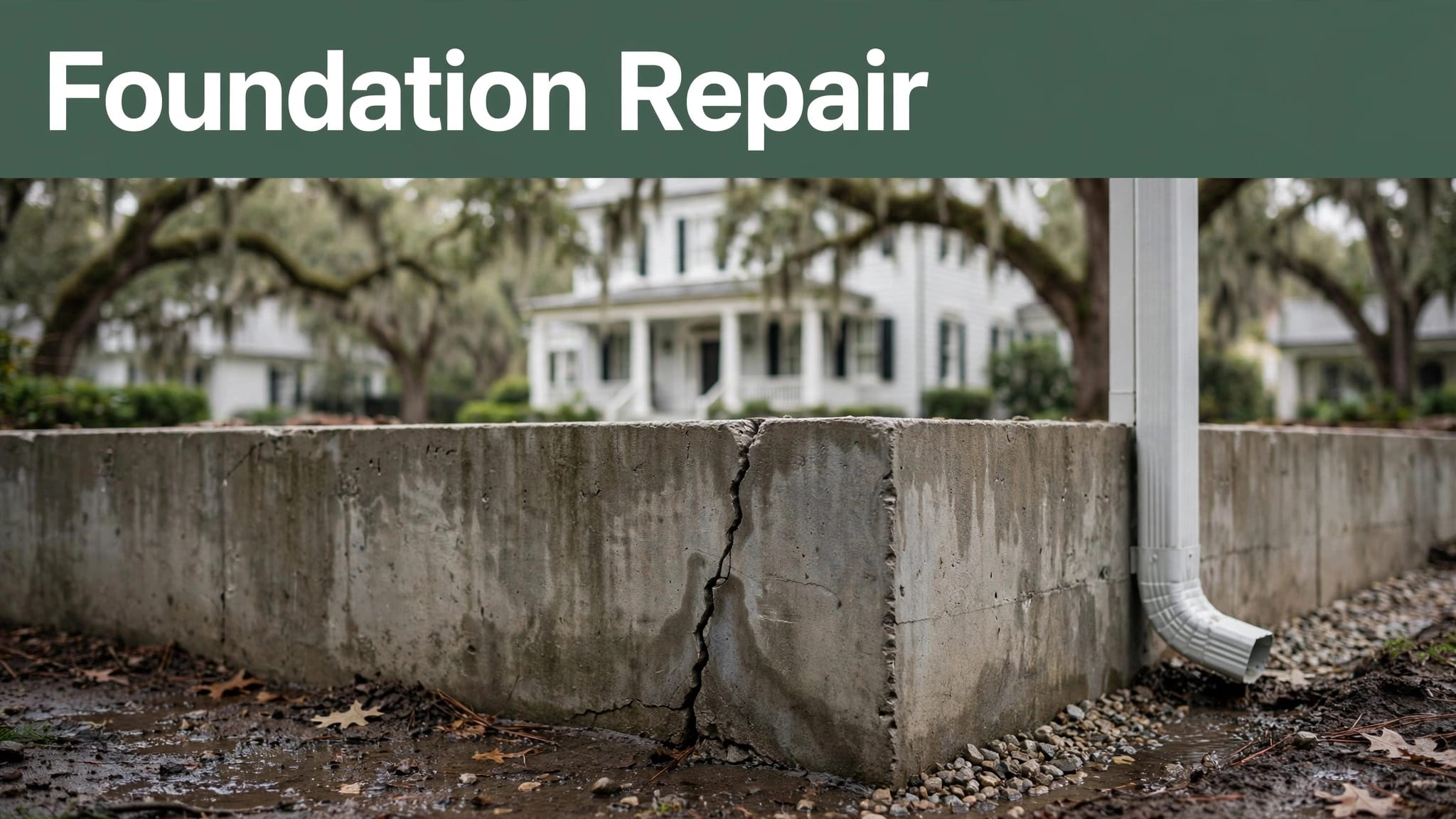
A foundation crack can be a simple moisture-entry point or a sign that the soil and structure are moving. The right foundation crack repair depends on the crack’s pattern, whether it changes over time, and what water does around your Charleston home after rain.
Lowcountry conditions make that diagnosis more important. Flat lots, heavy storms, high moisture, and runoff trapped near the footing can weaken support beneath slabs and along foundation walls.
Start by reading the crack, then correct the condition that caused it.
Key Takeaways
- Small, stable cracks often need cleaning and sealing to block moisture, but they still deserve monitoring.
- Horizontal, stair-step, widening, offset, or actively leaking cracks need a prompt professional evaluation.
- Epoxy injection can restore continuity in suitable dormant cracks. It won’t stop ongoing settlement.
- Drainage, grading, gutters, and hardscape slopes matter as much as the visible concrete repair.
- Underpinning or engineered stabilization may be necessary when the foundation itself has moved.
A repair that only fills the crack can fail again when water keeps softening soil or washing support away beside the home.
Why Charleston Foundations Develop Cracks
Concrete is durable, but it relies on stable support below and controlled water movement around it. Charleston homes often face both challenges at once.
Rainfall, Saturated Soil, and Runoff
When roof runoff lands beside a foundation, water can saturate the soil and reduce its ability to support a slab or footing. After repeated storms, water may also carry fine soil away from slab edges, driveway aprons, and foundation corners.
A 2017 Charleston-area case study from Lowcountry Foundation Repair described downspout discharge and recurring backyard flooding that eroded supporting soil near one corner of a house. The result included settlement and cracks in the foundation wall.
Water doesn’t need to enter the house to cause trouble. Persistent wet ground, washed-out soil, or ponding next to the structure can create the conditions for movement.
Shrinkage and Everyday Concrete Movement
Some cracks form as new concrete loses moisture and shrinks during curing. Others appear where slabs meet walls, porches, steps, or additions without enough room for normal movement.
Hairline shrinkage cracks are common in concrete surfaces. However, a crack that widens, changes elevation, or returns after repair points to a larger issue beneath or behind the concrete.
How to Read Foundation Cracks Before Repair
Crack shape tells you more than crack location. Take clear photos with a ruler for scale, note the date, and check the area after the next heavy rain.

Hairline and Vertical Cracks
Thin vertical cracks in a poured concrete wall are often related to shrinkage. If the wall remains plumb, the crack is dry, and both sides stay in the same plane, a moisture-control repair may be appropriate.
Inspect the crack edges for fresh chipping, staining, or a visible gap. Marking each end with a pencil and checking it monthly can reveal whether the crack is active.
Cracks around 1/8 inch wide, cracks that wrap around a corner, or cracks that begin to spread need closer attention. Width alone does not diagnose the problem, but it helps document change.
Stair-Step, Horizontal, and Offset Cracks
Stair-step cracks in block or brick foundation walls can follow mortar joints as the structure moves. Horizontal cracks may indicate pressure against a wall, especially where wet soil presses from the outside.
An offset occurs when one side of a crack sits higher or farther out than the other. Door frames that bind, sloping floors, separating trim, and new gaps around windows add useful context.
ASCE Texas Section residential foundation guidelines identify vertical displacement over 3 mm, active diagonal cracks near openings over 3 mm, and stair-step cracks over 6 mm as conditions that warrant engineering review.
Crack sealant can keep out water. It cannot pull a shifted foundation back into position or restore lost soil support.
Foundation Crack Repair Options for Charleston Homes
The repair method must fit the material, crack condition, and cause. A good scope identifies whether the concrete is stable before any filler or coating goes into the crack.
Sealants, Routing, and Surface Patching
For a dry, stable, non-structural crack, a contractor may clean the joint, slightly widen its surface, and apply a compatible flexible sealant. This approach helps limit moisture entry where the crack is not expected to carry structural load.
Surface patches can address small chips and shallow spalls near slab edges. The old concrete must be clean and sound, and the underlying base must remain stable. A patch over moving concrete usually breaks loose.
Sealers can reduce water and salt intrusion on clean, sound concrete. They do not restore strength or correct settlement.
Epoxy, Polyurethane, and Structural Repairs
Epoxy injection bonds suitable dormant cracks and can restore stiffness across the crack. The ASCE Texas guidance discusses epoxy injection for slab cracks around 1/32 inch and wider when restoring stiffness is the repair goal.
Polyurethane injection has a different job. It can help seal certain wet or leaking cracks because it reacts with moisture and expands. It should not be presented as a structural fix for a moving wall.
For a useful overview of repair selection, including injection, grouting, slab lifting, and reconstruction, see the Bureau of Reclamation’s Guide to Concrete Repair. The repair objective matters as much as the material used.
Underpinning and Slab Stabilization
Settlement may require support beneath the foundation rather than a repair at the crack. Underpinning transfers load to more reliable bearing conditions, often through a design prepared or reviewed by a structural engineer.
Slab lifting can help with settled exterior flatwork when the slab itself remains sound. It is commonly considered for sidewalks, patios, and driveways, not as a substitute for foundation stabilization.
If cracking is tied to a new addition or failed floor support, the project may need engineered plans and a full Charleston concrete slabs and foundations scope that addresses excavation, base preparation, reinforcement, and drainage.
Fix the Drainage Problem Alongside the Crack
A repaired crack needs a dry, stable setting. In Charleston, that usually means examining the roof, grade, surrounding concrete, and the path water takes after it leaves the property.
Start With Gutters and Finished Grade
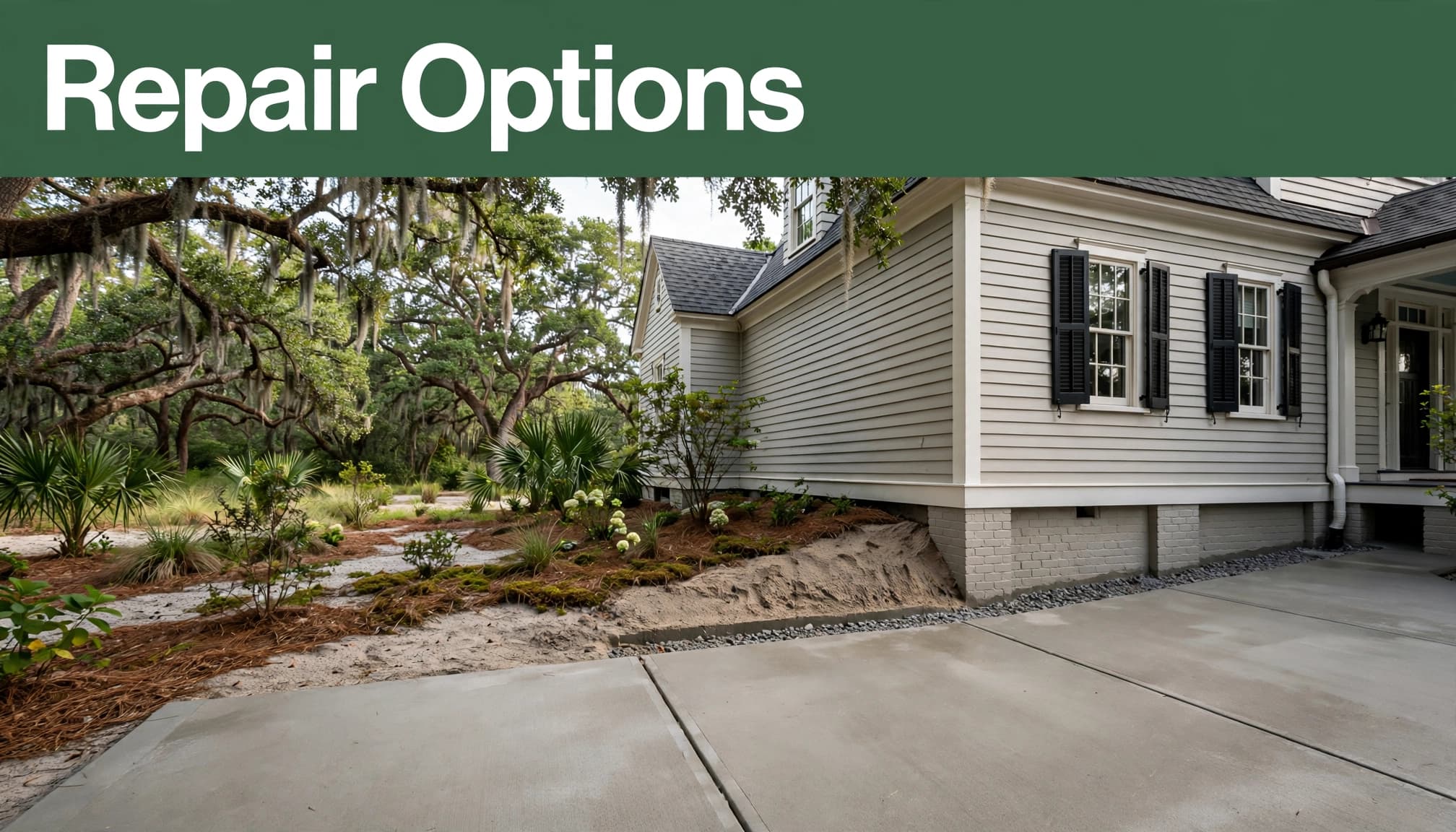
Clean gutters before leaf buildup blocks flow. Downspouts should discharge away from the foundation, not into a mulch bed beside the crawl space or slab edge.
Many drainage guides recommend extending downspouts several feet away and shaping grade to fall away from the home. The exact solution depends on lot elevation, available outlet, nearby properties, and local requirements.
Walk the site after a strong rain. Water that remains beside the foundation into the next day deserves attention, unless it sits in a planned swale or approved drainage feature.
Use Drains When Surface Grading Is Not Enough
French drains, footing drains, surface inlets, and sump systems can move water where a flat lot cannot. Yet a drain only works when its pipe, stone, filter fabric, discharge point, and access for maintenance work together.
Water should never be routed toward a neighbor’s lot, crawl space, or another low area. Before adding a drain or changing site grades, check the rules that apply to your municipality or Charleston County.
Protect the Foundation When Updating Exterior Concrete
New hardscape can either improve water control or make a moisture problem worse. Finished elevations and slope should be set before the concrete truck arrives.
A concrete driveway in Charleston, SC needs pitch that directs runoff away from the garage and foundation. A sinking or reverse-sloped driveway may need base repair before new concrete goes down.
Likewise, a stamped concrete patio in Charleston should shed rain away from the house while keeping joints where the patio meets fixed walls. Decorative finishes don’t change the need for stable subgrade and correct drainage.
For pool deck concrete in Charleston, texture, drainage, and slope all matter because splash-out and summer storms keep surfaces wet. Traditional tabby concrete in Charleston properties need another level of care. The oyster-shell material may be historic, so identify it before applying coatings, aggressive cleaning, or replacement methods.
A concrete slab installation in Charleston also needs coordination with future walkways, patios, and driveway elevations. Water management belongs in the site plan, not as an afterthought after cracking appears.
Choose a Contractor Who Checks the Whole Site
A reliable concrete contractor in Charleston, SC will look beyond the visible crack. The visit should include foundation walls, slab edges, gutters, downspouts, grade, nearby hardscape, erosion, and signs of ponding.
Ask whether the crack appears dormant or active. Then ask what must happen before repair, such as redirecting roof water, correcting a patio slope, replacing failed soil, or getting an engineer’s opinion.
A capable Lowcountry concrete contractor should explain the proposed repair in plain language. The scope should state whether it includes demolition, excavation, subgrade work, reinforcement, drainage changes, concrete placement, finishing, and cleanup.
For a crack tied to settlement, bowing, displacement, or safety concerns, start with a structural engineer. For stable concrete repairs and site work around the home, Get a Free Quote with details and photos of the affected area.
FAQ
Can I repair a foundation crack myself?
A homeowner can monitor a small, dry hairline crack and keep water away from it. However, DIY products are a poor choice for cracks that leak, widen, show displacement, or return after filling.
Surface filler can hide a warning sign. Have active or suspicious cracks evaluated before covering them.
Does epoxy injection fix every foundation crack?
No. Epoxy works best for certain clean, dormant cracks where bonding the concrete is the right objective. It cannot correct soil loss, foundation settlement, hydrostatic pressure, or ongoing movement.
The crack needs a stable condition first. Otherwise, it may open beside the repaired area or break the bond later.
When should I replace concrete instead of repairing it?
Replacement becomes more likely when concrete has widespread spalling, deep deterioration, exposed reinforcement, major settlement, hollow areas, or a failed base. A sound but cosmetically damaged surface may still respond well to a targeted repair.
The decision should follow an inspection of the concrete and the support below it.
A Lasting Repair Starts Below the Surface
Effective foundation crack repair in Charleston begins with an accurate diagnosis. A sealant or injection may handle a stable crack, while movement calls for structural support and drainage correction.
Water control, stable soil, and properly planned exterior concrete give any repair a better chance of lasting. Treat the crack as evidence, then fix the condition behind it.