Charleston concrete has to handle more than everyday foot traffic and parked cars. Summer heat, sudden downpours, wet soil, coastal moisture, and settling can test a slab long after the crew leaves. Fiber reinforced concrete gives driveways, patios, and pool areas added help against early cracking, but it isn’t a shortcut around good site preparation. The strongest result comes from matching the mix, base, drainage, joints, and finish to the property.
Why Fiber Reinforced Concrete Fits Charleston Flatwork
Concrete gains strength as it cures, yet it also shrinks. That shrinkage can create fine cracks while the material is still young, especially when sun, wind, and heat pull moisture from the surface too quickly.
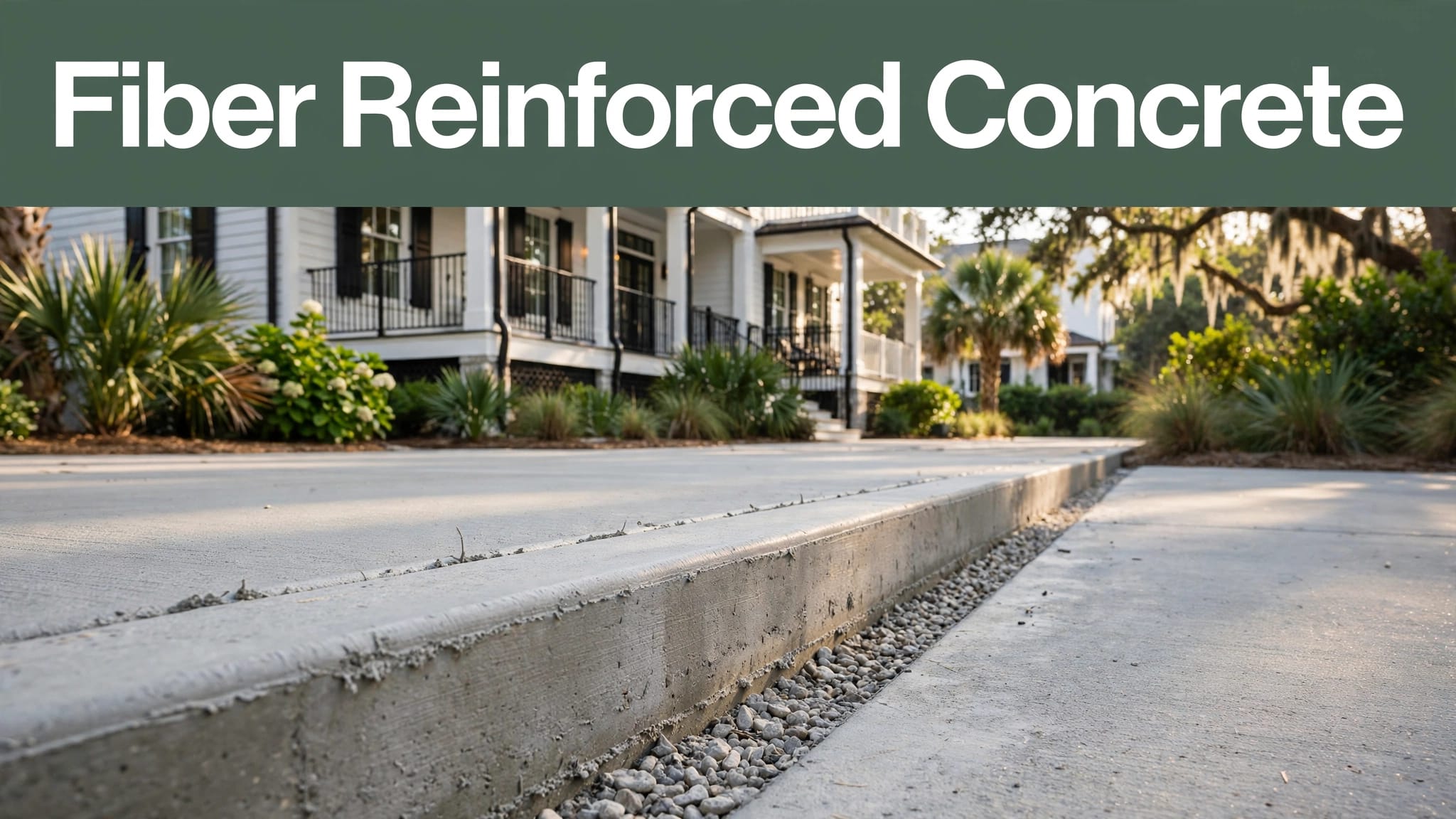
Fibers are mixed through the concrete before placement. They form a dispersed network within the slab, helping limit crack formation and control crack width. The American Concrete Institute’s fiber guidance explains that synthetic microfibers are commonly used to control plastic-shrinkage and settlement cracking.
Microfibers help during the first hours
Micro synthetic fibers are small, fine strands, often polypropylene. For residential flatwork, they are commonly added to reduce plastic-shrinkage cracking during placement and early curing.
That matters on a bright Charleston afternoon. A slab can lose surface moisture before it has enough strength to resist stress. Fibers help, but the crew still needs to manage timing, finishing, and curing.
Macrofibers address post-crack behavior
Macro synthetic fibers are larger and are intended for greater toughness and post-crack support. A contractor may consider them for projects with heavier demands, such as equipment pads, commercial flatwork, or certain thicker slabs.
The ACI’s overview of fiber types and dosage notes that small synthetic-fiber amounts are often used for plastic-shrinkage control. Higher fiber volumes may target hardened-concrete toughness and crack-width control.
Fibers help control cracking. They do not make concrete crack-proof or correct a weak base beneath the slab.
Fibers Don’t Replace Drainage, Joints, or Reinforcement
A strong-looking surface can still fail if water moves beneath it. Charleston properties often have sandy fill, soft spots, high groundwater, or grades that send stormwater toward the slab. Fiber reinforcement cannot solve any of those conditions.
A reliable installation starts below the concrete. The crew removes weak material, establishes the proper grade, places a compactable base where needed, and corrects low spots before forming the slab.
Control joints still direct movement
Concrete expands and contracts with temperature and moisture changes. Control joints create planned locations for that movement, reducing the chance of broad random cracking across the surface.
Joint spacing, depth, and layout should fit the slab thickness and shape. Long narrow panels, re-entrant corners, and abrupt changes in width deserve extra attention. Fibers support crack control, while joints still guide where movement occurs.
Steel has a separate job
For some driveways, structural slabs, and load-bearing areas, rebar or welded-wire reinforcement may still belong in the plan. Fiber-reinforced concrete is not an automatic substitute for conventional steel.
The appropriate fiber depends on the slab’s intended performance. The ACI’s fiber-selection guidance distinguishes between microfibers for early-age cracking and macrofibers for hardened crack control and toughness. A well-prepared base and properly designed reinforcement remain important for slabs that carry concentrated or repeated loads.
Better Concrete Driveways for Lowcountry Soil
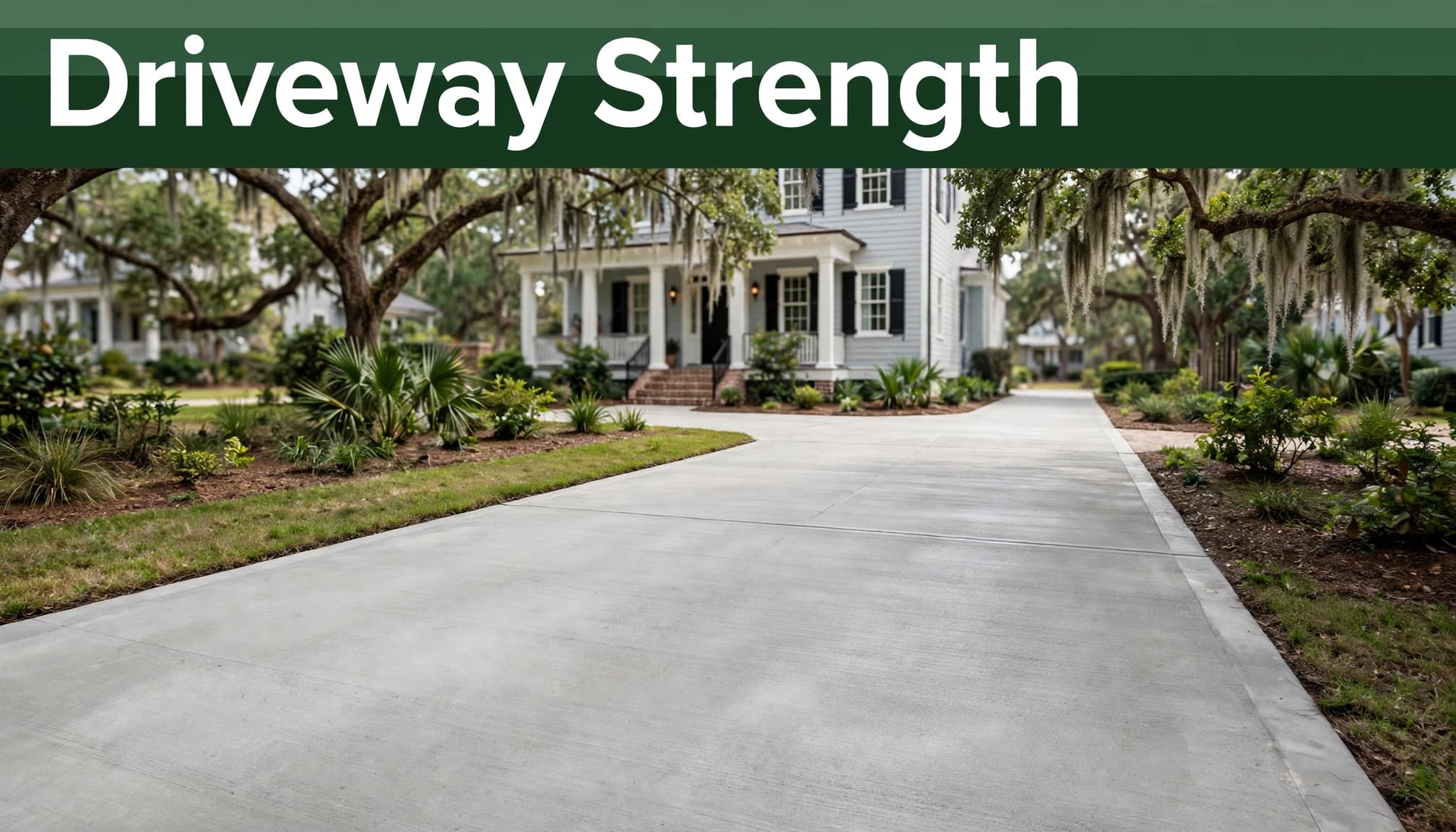
A concrete driveway in Charleston, SC, faces tire loads, runoff, coastal humidity, and occasional delivery vehicles. Fiber reinforcement can improve the slab’s resistance to early shrinkage cracks, but driveway durability starts with thickness and support.
A light residential driveway often needs a different plan than a pad used for full-size trucks, trailers, or frequent service traffic. The slab should match the vehicles that will use it, not only the visual footprint.
Grade water away before the pour
Water should move away from the garage, house, and neighboring property. Poor drainage can soften soil, wash out slab edges, and leave standing water that shortens the life of the concrete.
A Lowcountry concrete contractor should review downspouts, swales, existing ditches, driveway aprons, and nearby drainage easements before work begins. Never cover or alter an easement without confirming the recorded terms and required approvals.
Select the right finish for traction
Broom-finished concrete remains a practical choice for most driveways because it provides dependable traction in wet weather. Decorative borders, saw-cut patterns, or a light exposed-aggregate look can add character without turning the whole drive into a maintenance project.
For broader planning help, review these Charleston concrete project tips before choosing thickness, finish, or drainage details. Early decisions are far less expensive than cutting into a new slab later.
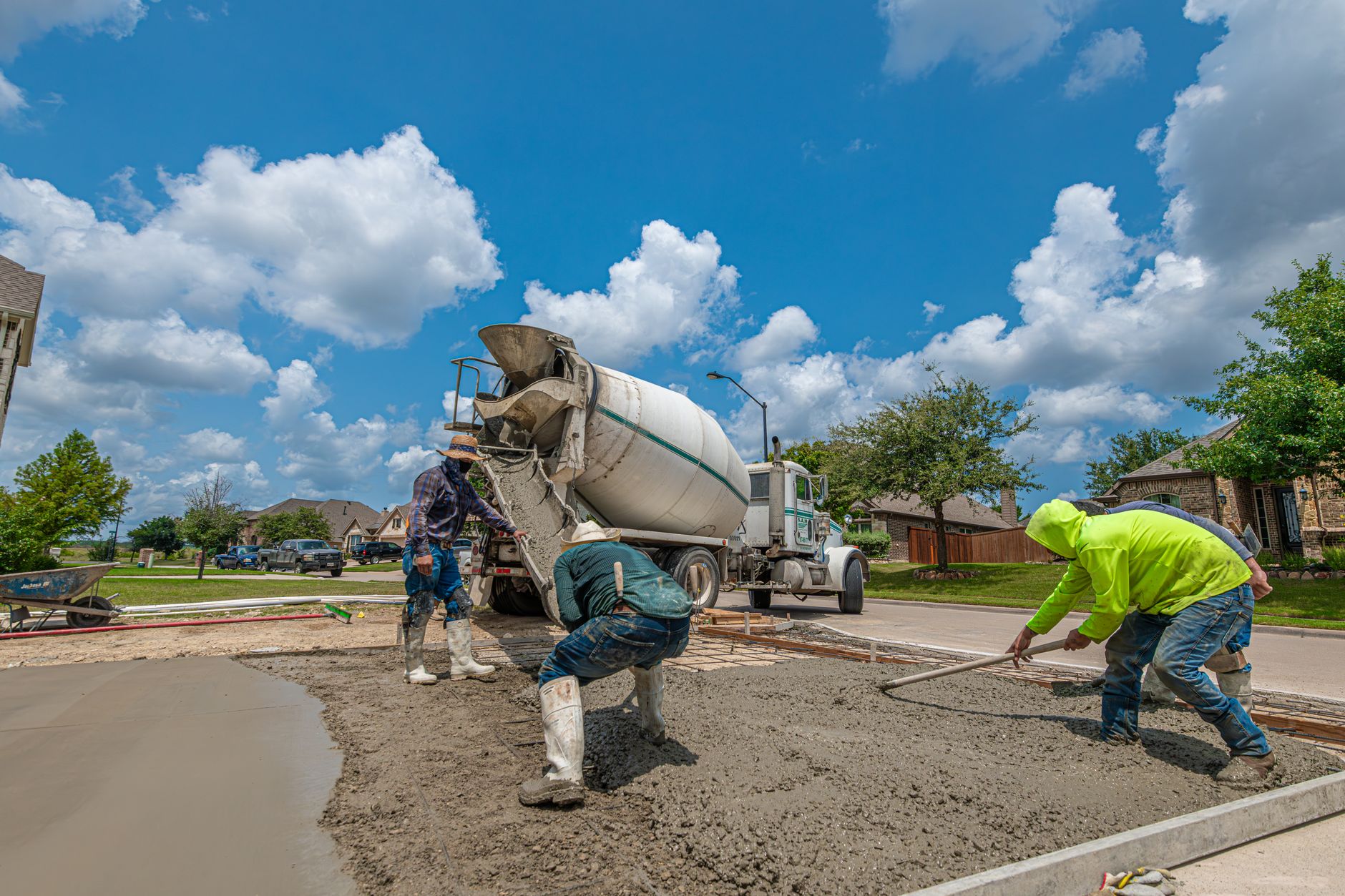
Photo by Ryan Stephens
Fiber-Reinforced Patios Need a Stable Base
A patio carries less weight than a driveway, but it still needs solid support. Outdoor kitchens, grills, furniture, fire features, and changing soil moisture can all put stress on a backyard slab.
For a standard patio, fiber reinforced concrete can be a sensible addition when the goal is better crack control and a clean, durable surface. It works especially well when paired with correct jointing and careful curing.
Plan for actual use, not empty square footage
A small seating patio and a large entertaining area need different layouts. Leave room for chairs to slide back, people to move around a table, grill access, and drainage paths.
Heavy features need extra thought. A built-in kitchen, masonry fire pit, hot tub, or roof posts may require a thicker section, footings, or an engineered design. Don’t treat a structural load like ordinary patio furniture.
Fire pits need heat protection
Concrete is non-combustible, but concentrated heat can still stain, crack, flake, or spall its surface. Moisture within the slab may turn to steam under intense heat.
Set portable fire pits on a level, non-combustible heat barrier, follow the manufacturer’s clearance directions, and keep combustible items at least 10 feet away unless stricter requirements apply. A patio with major cracks, settlement, or drainage trouble deserves an inspection before adding a permanent fire feature.
Pool Deck Concrete Requires a Different Finish
Pool deck concrete in Charleston needs to handle bare feet, splashing water, direct sun, and regular cleaning. A smooth, dense finish may look polished, but it can become slick when wet.
Fiber reinforcement can help the deck resist early shrinkage cracking. Still, texture, slope, drainage, and a suitable sealer determine how the surface performs around water.

Build slope into the surface
Water should drain away from the pool coping, home, and low-lying areas. Standing water creates slip hazards and can work beneath slab edges over time.
The surface should have a consistent, comfortable texture. Light broom finishes, exposed aggregate, and carefully selected decorative textures can provide better grip than a slick troweled surface.
Decorative choices still need practical details
A stamped concrete patio in Charleston can mimic stone, brick, or slate while keeping the continuous strength of poured concrete. However, stamped patterns near a pool need enough texture for wet feet and a sealer suited to exterior use.
Tabby concrete in Charleston offers another local option. Oyster-shell character works well for walks, entries, patio borders, and coastal-style accents. It pairs especially well with modern fiber-reinforced mixes when homeowners want a Lowcountry look without relying on historic tabby construction methods.
What to Ask Before Approving the Mix
The word “fiber” doesn’t describe one single product or one standard mix. Ask what kind of fiber the contractor plans to use, what problem it is meant to address, and how it fits the rest of the installation.
A concrete contractor in Charleston, SC, should explain the full scope in plain language. That includes demolition, excavation, base preparation, forms, reinforcement, joints, mix strength, finish, curing, cleanup, and drainage work.
Avoid adding water at the job site
Fibers can reduce fresh-concrete workability. A crew may need proper mixing time or approved admixtures to keep the concrete placeable without weakening the mix.
Adding random water to a ready-mix truck can raise the water-cement ratio and reduce finished strength. The right answer is a planned mix design, not a last-minute adjustment with a hose.
Compare proposals beyond the price
Two quotes can list the same square footage but cover very different work. One may include compacted base material and haul-off. Another may assume the ground is ready.
Ask how the crew will protect landscaping, control runoff, handle access, and keep the job site clean. Explore the company’s Charleston concrete services to compare driveway, patio, pool deck, slab, and decorative options that fit the same property.
Curing Protects the Work You Just Paid For
Fresh concrete needs time and moisture to gain strength. Foot traffic, furniture, vehicles, and pressure washing should wait until the slab has cured enough for its intended use.
A crew should protect newly placed concrete from rapid moisture loss, unexpected rain damage, and premature traffic. In hot weather, placement timing can make a major difference.
Give the surface time before sealing
Concrete should cure before a sealer goes on. Applying a product too early can trap moisture or interfere with the finish. The correct wait time depends on the product, mix, and weather conditions.
After curing, an exterior-grade sealer can help limit staining and make routine cleaning easier. Pool areas and decorative work may need more regular attention because sun, water, and chemicals wear on the surface.
For a driveway, patio, or concrete slab installation in Charleston, a site visit gives the crew a chance to assess base conditions and water flow before settling on a mix. Get a Free Quote to discuss the practical details for your home or business.
A Strong Slab Starts Below the Surface
Fiber reinforced concrete is a useful tool for Charleston driveways, patios, and pool decks. It can reduce early cracking and improve crack control, particularly when weather makes curing more demanding.
The fibers are only one part of the job. Compacted support, managed drainage, planned joints, and patient curing give the slab its best chance to stay level, useful, and attractive through Lowcountry seasons.