A driveway can crack even when the concrete mix is sound. In Charleston, the bigger problem often starts below the surface, where saturated soil, runoff, and shifting sand weaken the base.
A French drain can protect a concrete driveway when it collects water before it reaches the slab or washes away its support. It won’t correct a driveway that slopes toward the house, lacks a compacted base, or sits in a flood-prone area without a proper outlet. The right drainage design depends on where water comes from, where it needs to go, and how the driveway was built.
Key Takeaways
- A French drain helps control groundwater and runoff beside a driveway.
- It needs a reliable outlet, proper slope, clean stone, and a perforated pipe.
- Channel drains, swales, or culverts may work better when water crosses the driveway surface.
- Good concrete preparation still matters, including subgrade work, compaction, joints, and curing.
- Regularly inspect ponding, edge erosion, cracks, and clogged outlets.
Why Charleston Driveways Struggle With Water
Charleston’s Lowcountry conditions create several drainage challenges at the same time. Sandy layers can shift, clay expands and contracts with moisture, and organic soil can compress as it breaks down. That changing support puts stress on the concrete above it.
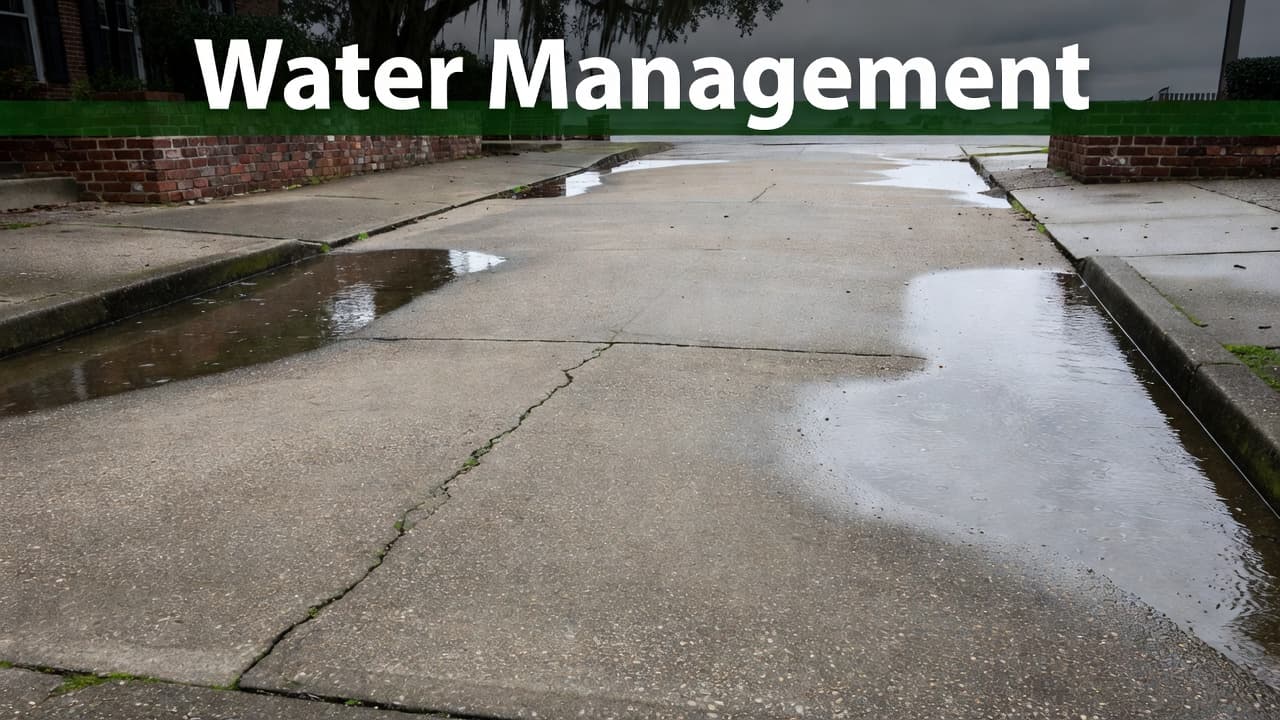
Heavy rain adds another problem. Water can flow toward the driveway from a roof, yard, street, or neighboring property. If the ground beside the slab stays saturated, water may seep beneath the edge. Over time, the base can erode and leave empty pockets below the concrete.
A concrete driveway Charleston SC homeowners use every day needs more than a smooth surface. It needs a stable foundation and a path for water to leave the site. Without both, vehicles can cause a supported slab to settle, rock, or crack.
Standing water also creates problems in coastal areas. Moisture can carry salts into cracks and open pores. Those salts may contribute to surface damage and corrosion around embedded steel. Sprinkler overspray can soften the soil beside the driveway, while downspouts can send concentrated flow directly toward the slab.
Look for early warning signs such as:
- Water that remains after the rest of the yard dries
- Soil washing away near the driveway edge
- Cracks that widen after storms
- A slab that rocks under a vehicle
- Mud or sand appearing along joints
- Crumbling edges near downspouts or sprinklers
Fixing the water source early costs less than rebuilding a driveway after the base has failed.
What a French Drain Actually Does
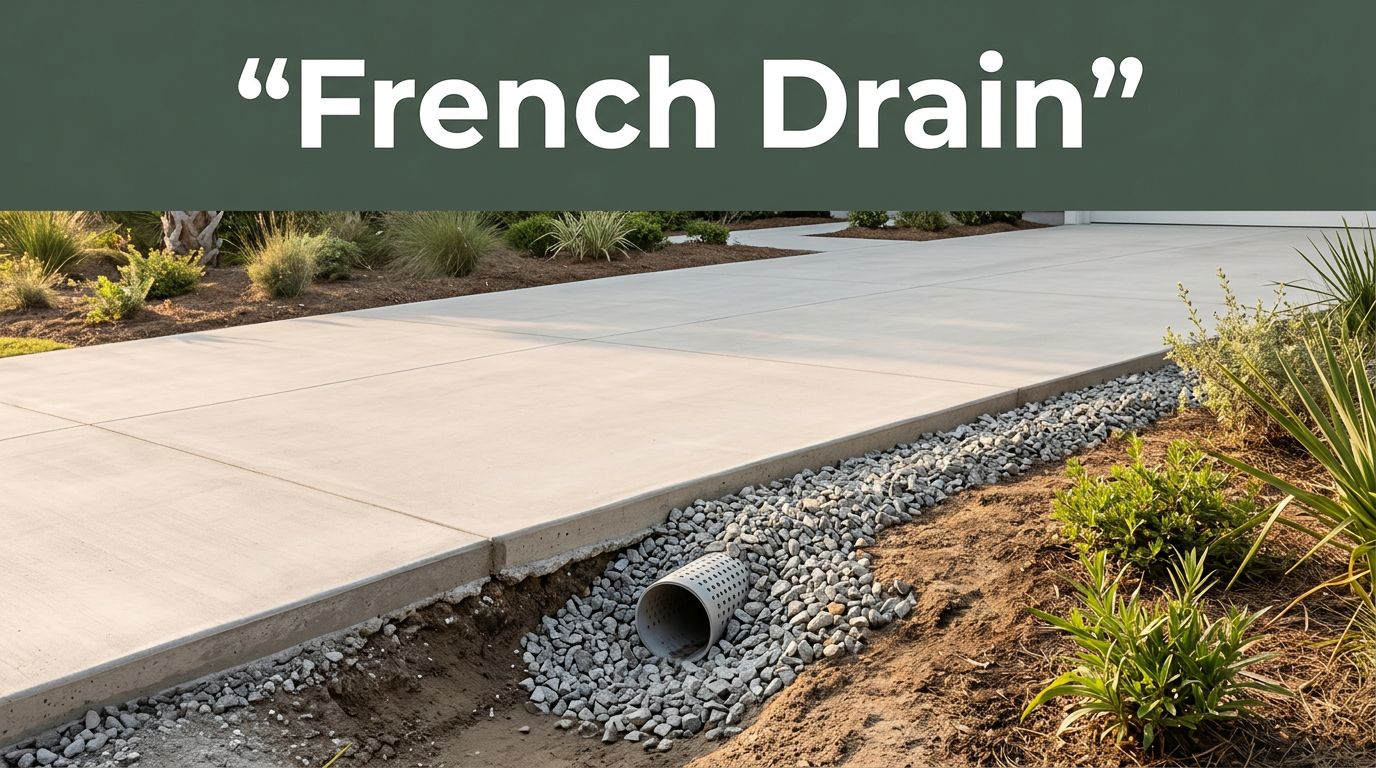
A French drain is a gravel-filled trench with a perforated pipe near the bottom. Water enters through the gravel, reaches the pipe, and travels toward an approved discharge point. The system can collect groundwater and reduce saturation along one or both sides of a driveway.
A French drain in Charleston is most useful when water moves through the soil or gathers along the slab edge. For example, a trench drain may intercept water flowing down a slight yard slope before that water reaches the driveway foundation.
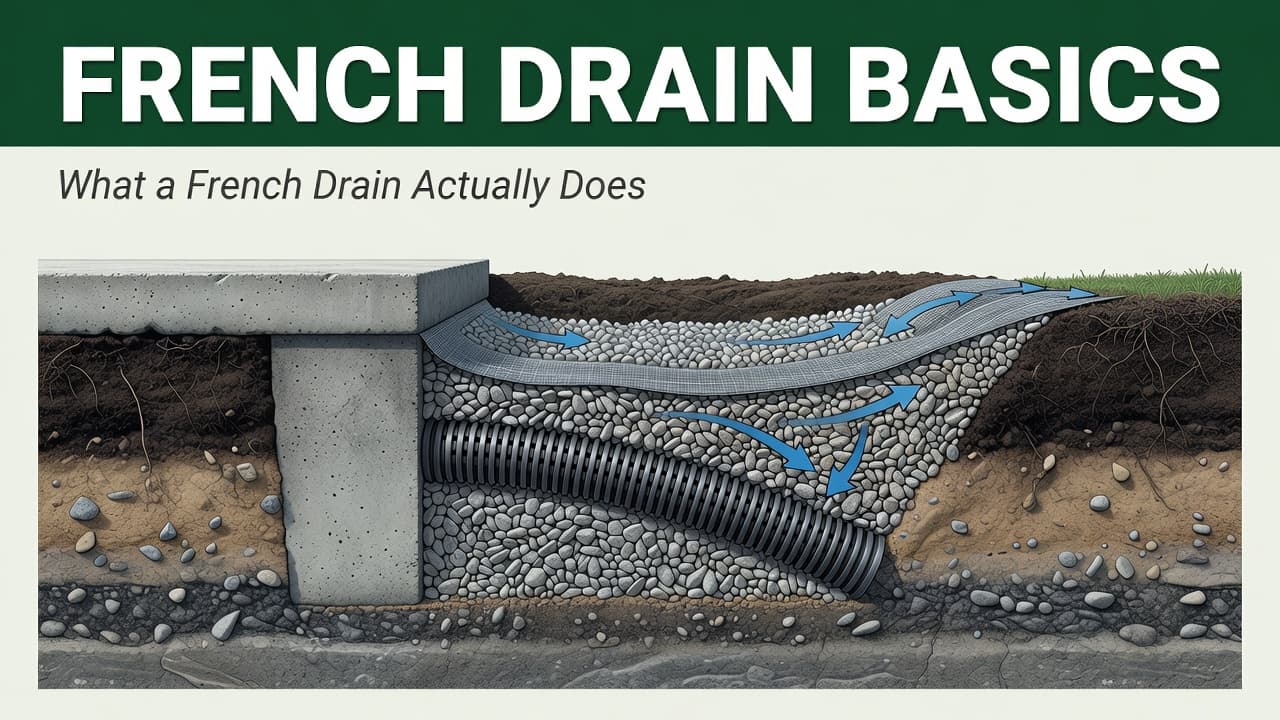
The pipe needs a consistent fall and a place to discharge. That outlet could lead to daylight, a suitable drainage area, or another approved system. A trench that ends in saturated soil won’t remove much water. In areas with a high water table, the outlet and elevation require careful planning.
A French drain is different from a channel drain. A French drain collects water below grade. A channel drain has a surface grate and catches water that runs across pavement. If rainwater flows over the driveway in a concentrated stream, a channel drain may be the better choice.
The system also differs from a culvert. A culvert carries water beneath a driveway when the drive crosses a ditch or drainage swale. In Charleston County and North Charleston, driveway crossings may require specific drainage arrangements. Check local requirements before changing a ditch, swale, or roadside entrance.
For additional background, Cantey’s French drain installation guidance shows how these systems use gravel and perforated piping to manage unwanted water around structures.
When a French Drain Can Protect the Slab
A French drain can help protect a driveway in several practical situations. It may intercept water from an uphill yard, reduce wet soil beside the slab, and limit erosion at the driveway edge. It can also help when a downspout discharges near the driveway but the yard has no clear drainage path.
The best results come when the drain is planned with the concrete work. The installer can review the driveway layout, identify low spots, set the trench elevation, and place the outlet before the slab goes down. A retrofit can work too, although digging beside an existing driveway may expose weak edges or disturb nearby landscaping.
Drainage planning belongs in every exterior concrete project. That includes choosing a concrete contractor Charleston SC homeowners can trust, planning a stamped concrete patio Charleston families will use for entertaining, or comparing pool deck concrete Charleston options around a swimming pool.
Still, a French drain cannot solve every driveway problem. It won’t stop water that flows across the full pavement width during a major storm. It won’t replace a missing culvert, correct a driveway that slopes toward the garage, or repair a void beneath a settled slab.
The surrounding grade matters just as much. A common planning target is at least a 1% slope away from the house, but the correct grade depends on the site and available drainage route. The driveway should move water away without sending it toward a foundation, neighboring property, or public roadway.
A professional assessment should answer four questions:
- Where does the water originate?
- Does it move across the surface or through the soil?
- Where can the collected water discharge?
- Has erosion already removed support under the slab?
Those answers determine whether the project needs a French drain, a channel drain, a culvert, grading work, or a combination.
Concrete Preparation Matters as Much as Drainage
Water control protects the base, but the base still needs proper preparation. Before pouring, a Lowcountry concrete contractor should remove unsuitable material, shape the subgrade, and compact the area evenly. Soft spots need correction instead of being covered with concrete.
Many driveway designs use a compacted stone base beneath the slab. A four-inch base is a common starting point for passenger vehicles, while heavier traffic may require a thicker or specially engineered section. In clay-rich soil, geotextile fabric can help separate native soil from the aggregate and reduce mixing.
The slab also needs a design suited to its use. Four inches is a common minimum thickness for a residential driveway, but delivery trucks, trailers, and commercial vehicles need more support. Reinforcement, control joints, edge details, and concrete strength should match the load and site conditions.
Concrete finishing and curing affect long-term performance too. Cutting joints at the right time gives shrinkage cracks a planned location. Keeping the surface from drying too quickly helps the concrete gain strength. Sealer can reduce water and salt absorption, but it cannot compensate for poor drainage underneath.
The same preparation standards apply to patios, pool areas, and slabs. A concrete slab installation Charleston property owners plan should include soil review and water management before the pour. Homeowners researching tabby concrete Charleston projects should ask the same questions, since decorative or locally inspired finishes still depend on a stable, well-drained base.
Gorilla Concrete’s Charleston concrete services include driveways, slabs, patios, pool decks, commercial flatwork, and decorative concrete. The right contractor should discuss drainage as part of the site work, not treat it as a separate concern after cracking appears.
How to Plan and Maintain a French Drain
A useful French drain starts with a site review rather than a standard trench dug beside the driveway. The installer should locate utility lines, examine the yard’s fall, check the driveway edge, and identify a legal discharge point. The trench depth and pipe location depend on the water problem.
The trench commonly uses washed stone around a perforated pipe, with a filter fabric or other separation method where soil conditions require it. The pipe needs enough slope to move water. The top can use clean stone, soil, or landscape material, depending on the location and maintenance needs.
Keep roof runoff separate when possible. A downspout may need a solid pipe that carries water away from the foundation instead of releasing it beside the French drain. Likewise, adjust sprinkler heads so they don’t spray the driveway edge every day.
After installation, inspect the system before and after major storms. Check that the outlet flows, the trench hasn’t filled with sediment, and water no longer ponds against the slab. Remove leaves and soil from surface collection areas. If the outlet stays wet or backs up, the system may need cleaning or a different discharge plan.
Use local French drain listings in North Charleston to compare nearby drainage providers, but ask each one about concrete-adjacent work, outlet planning, soil conditions, and coordination with a concrete crew.
When to Call for an Inspection
Call for an inspection when water remains beside the driveway after ordinary rain, when the edge begins to crumble, or when cracks follow a recurring wet area. A contractor should check the slab, joints, grade, base, and nearby drainage features together.
A driveway that has settled may need lifting or replacement, depending on the size of the void and condition of the concrete. Adding a drain beside a damaged slab can slow further erosion, but it won’t restore support already lost beneath the pavement.
The same warning applies to new construction. If the driveway, apron, sidewalk, or slab is still in the planning stage, drainage is easier to address before concrete arrives. A site visit can also reveal whether the property needs a culvert at the entrance or a surface drain across the drive.
Protecting a Charleston Driveway Starts Below the Surface
A French drain can protect a Charleston concrete driveway when it intercepts the right water and sends it to a workable outlet. It is one part of a larger system that includes grading, a compacted base, sound concrete design, control joints, and regular maintenance.
If water keeps collecting beside your driveway, have the site evaluated before cracks become settlement or edge failure. You can Get a Free Quote for a drainage-aware concrete project that fits your Charleston or Lowcountry property.

