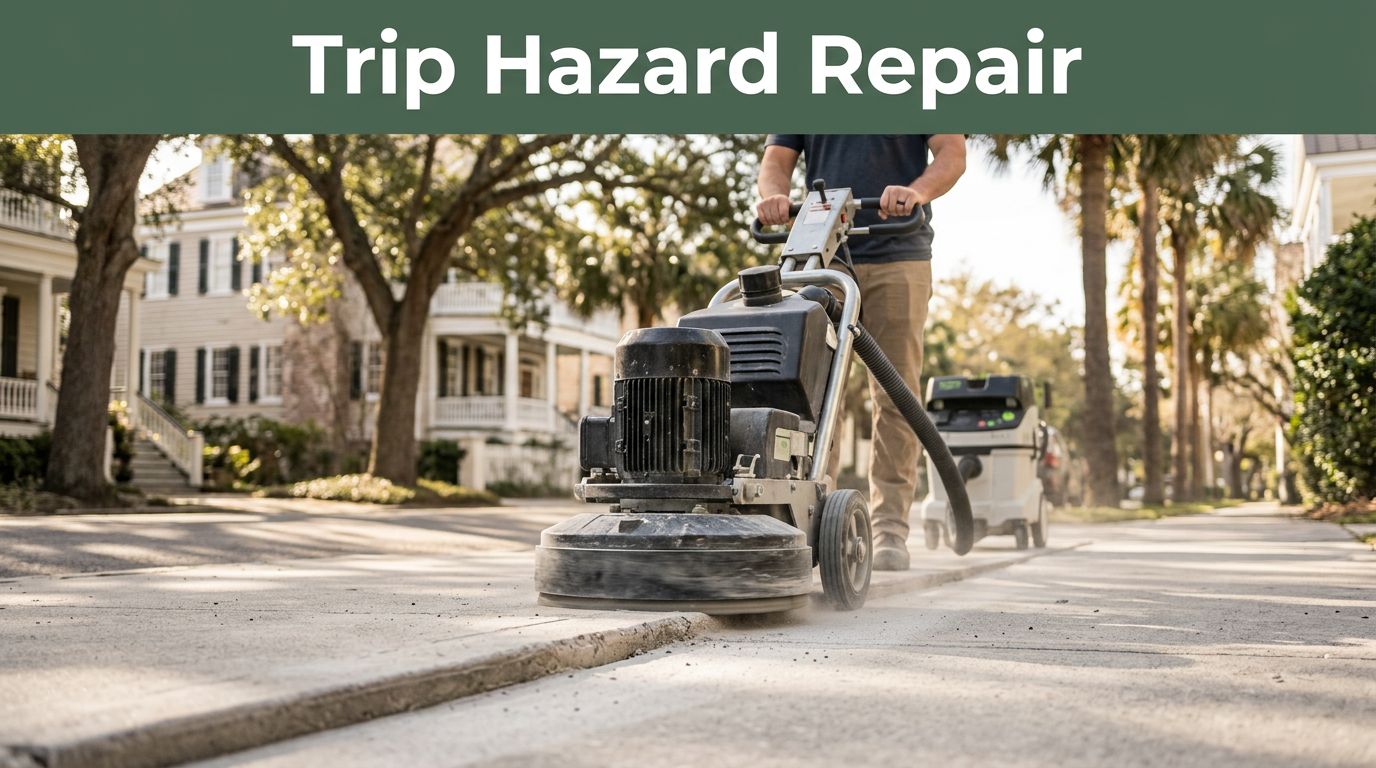

A concrete patio can transform a Charleston backyard, but placing one over a septic drainfield can damage the system and violate state requirements. In most cases, the answer is no.
The drainfield needs open, absorbent soil, regular access, and protection from heavy loads. Concrete blocks rainfall, compacts the soil, and can crush buried pipes. Before planning a patio, confirm the septic layout, review the permit, and check the proposed location with the South Carolina Department of Environmental Services (SCDES).
Key Takeaways
- Charleston-area rules prohibit concrete, asphalt, and other impervious surfaces over a septic drainfield.
- Concrete can compact the soil, crush distribution pipes, and block access for repairs.
- South Carolina generally requires a 20-foot setback from the soil absorption system and a 10-foot setback from the septic tank.
- A patio should be relocated outside the drainfield and its replacement area whenever possible.
- A qualified concrete contractor and septic professional should review the site before excavation or design work begins.
Why a Concrete Patio and Drainfield Don’t Mix
A septic drainfield treats wastewater after it leaves the septic tank. Perforated pipes distribute effluent through soil, where the ground filters contaminants and absorbs moisture. That process depends on the soil remaining open, stable, and able to receive both wastewater and rainfall.
A concrete slab changes those conditions. Its weight can compact the soil above the pipes, reducing the air space that helps wastewater move through the ground. If the soil becomes saturated or dense, effluent may rise toward the surface instead of dispersing properly.
The buried pipes also face physical damage. Drainfield lines are not designed to support the weight of a reinforced patio, footings, furniture, delivery equipment, or construction machinery. A crushed or shifted pipe can send wastewater into the yard and force an expensive repair.
Access creates another problem. Septic systems need inspection, pumping, and occasional repairs. Concrete permanently seals the area, making it harder to locate the lines or reach components such as distribution boxes, inspection ports, and the septic tank outlet.
The same concerns apply to more than a backyard slab. Concrete driveways, garages, sheds, pool decks, sport courts, and parking areas can all create problems when they sit over a drainfield or its approved replacement area. General septic guidance from NC State Extension’s septic owner guide also advises property owners to avoid covering drainfields with concrete or asphalt.
South Carolina’s requirements are especially important in Charleston because many properties have limited space, high groundwater, sandy soils, or older septic systems. A patio that looks clear of the tank may still overlap the drainfield several feet away.

A well-planned patio keeps impervious surfaces outside the septic system area.
Charleston Septic Setbacks and Permit Rules
SCDES administers South Carolina’s onsite wastewater requirements under Regulation 61-56. Those rules apply to septic systems in Charleston County, including many homes outside municipal sewer service.
Current guidance identifies a 20-foot minimum setback between a structure and the soil absorption system. A 10-foot setback applies between a structure and the septic tank. The rules also prohibit paving or placing an impervious surface over any portion of the septic system, including the designated replacement area.
That replacement area matters because it is reserved for future repairs. If the original drainfield fails, the property needs a suitable location for a new absorption system. A patio, driveway, pool, or addition over that area can eliminate the only approved repair option.
The first step is finding the approved septic permit and site plan. The drawing may show the tank, drainfield, reserve area, property lines, wells, buildings, and required setbacks. However, older systems may not match the original plan perfectly. Lines can be difficult to see, and past additions may have changed the yard.
Before anyone marks the patio, contact SCDES or a licensed septic professional. Charleston and North Charleston may also require local plumbing permits for work connected to sewer lines. When the proposed project sits near the system, written confirmation is better than relying on a tape measure and an old memory.
A contractor should not excavate over suspected septic lines to “see what is there.” Digging can damage pipes and create a sanitation issue. Instead, use the permit, locate the tank and lines with approved methods, and mark the entire system before finalizing the patio layout.
What Can Happen If You Pour Anyway?
The most immediate risk is soil compaction. A concrete patio requires excavation, base preparation, forms, reinforcement, and concrete delivery. Each stage adds pressure to ground that needs to remain permeable. Even before the slab cures, trucks, wheelbarrows, plate compactors, and stored materials can damage the drainfield.
Water management can also change. The field needs to receive and disperse wastewater through the soil. Concrete sheds rainwater toward its edges, which can create concentrated runoff near the drainfield. At the same time, the slab prevents normal evaporation and air exchange above the field.
When a system begins to fail, symptoms may appear gradually. You might notice wet spots, sewage odors, unusually green grass, slow drains, or wastewater surfacing near the patio. By then, the slab may need removal before a septic company can access and repair the system.
A failed drainfield can cost far more to correct than a relocated patio. Repair work may require removing concrete, excavating the yard, replacing distribution lines, importing suitable soil, or installing a new treatment system. The project can also disrupt landscaping and outdoor areas that were built around the original patio.
There is a property and permitting concern as well. Unapproved construction can create trouble during a home sale, insurance review, inspection, or septic repair. A future buyer may ask for documentation showing that the patio complies with the approved site plan. If the installation blocks the replacement area, the property may need corrective work before closing.
Guidance on structures near drainfields explains why septic fields generally need open access and protection from heavy construction. Rules vary by state, so Charleston homeowners should use SCDES requirements rather than general online advice as the final authority.
Safer Ways to Build a Charleston Patio
The simplest solution is to move the patio outside the drainfield and its reserve area. That may require a different shape, a narrower footprint, or a connection to another part of the yard. A good layout can preserve outdoor seating space without putting the septic system under concrete.
Grass is usually the safest surface over a drainfield. Shallow-rooted plants may also work, but avoid trees and deep-rooted shrubs. Roots can enter pipe joints, interfere with repairs, and make the field harder to inspect.
A lightweight feature may be possible in some situations, but homeowners should not assume that a pergola, deck, or paver area is automatically acceptable. Posts, footings, excavation, and repeated foot traffic can still affect the system. Ask SCDES and a septic professional before approving any structure.
If the patio must sit near the field, keep the construction boundary clearly outside the required setbacks. Use the site plan during layout, mark the tank and pipe routes, and keep concrete trucks and equipment away from the septic area. A professional crew can also plan drainage so patio runoff does not flow toward the field.
Design choices remain flexible once the location is safe. A homeowner might select a broom-finished slab, decorative borders, a stamped concrete patio in Charleston, or locally inspired Charleston tabby concrete for a coastal look. The finish should come after the site has been cleared for construction.
Choosing the Right Charleston Concrete Contractor
A concrete contractor in Charleston, SC, should understand more than forming and finishing a slab. The crew needs to recognize Lowcountry soil conditions, drainage patterns, access limits, and the location of septic components before work starts.
Ask whether the estimate includes site preparation, excavation limits, base material, reinforcement, drainage planning, cleanup, and protection of nearby utilities. Confirm who will locate the septic system and which professional will approve the placement. A low price is not useful if the patio has to be removed later.
The same planning standards apply to other concrete projects. A concrete driveway in Charleston, SC needs careful grading near a septic field. A Charleston pool deck requires additional attention to excavation, drainage, and equipment access. Concrete slab installation in Charleston also depends on stable subgrade preparation, especially where wet or fill soils are present.
For a broader look at residential and commercial flatwork, patios, slabs, driveways, and decorative finishes, review Charleston concrete services. A local crew can compare the septic plan with the proposed design before ordering materials or scheduling a pour.
Homeowners who need pricing for a compliant patio location can Get a Free Quote. Provide the septic permit, a site sketch, photos of the yard, and the approximate patio dimensions so the contractor can evaluate the project accurately.
Conclusion
Pouring a concrete patio over a Charleston septic drainfield can damage pipes, compact treatment soil, block repairs, and violate SCDES requirements. The safer approach is to locate the tank, drainfield, and replacement area before designing the patio.
A well-planned outdoor space can still include decorative finishes, Charleston tabby concrete, or a stamped patio. The difference is placing the concrete where the septic system has room to work and remain accessible.**