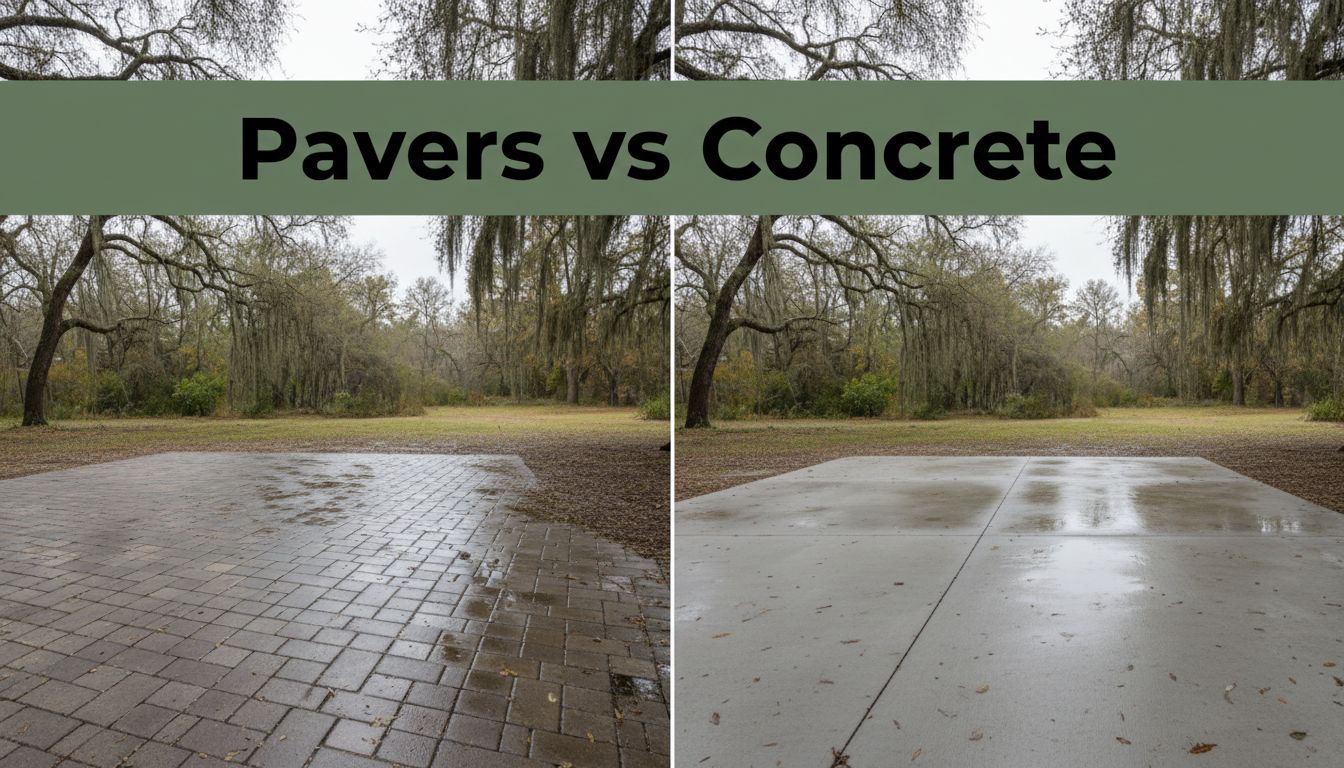
A pavers vs concrete patio can look great on day one and still be the wrong choice for Charleston. As an outdoor living space, it enhances your home, but here, water often decides what lasts.
If you’re weighing pavers versus concrete for your patio, don’t focus on looks alone. In the Lowcountry, moisture, drainage, and shifting ground can turn a good-looking patio into a repair job faster than you’d expect. That local reality is what matters most in landscape design.
Charleston weather is the real tie-breaker
Charleston patios deal with heavy rain, high humidity, and soil that doesn’t always stay put. Add occasional cold snaps (even in Charleston, these can trigger freeze-thaw cycles that impact material health), summer downpours, and flat lots with slow runoff, and the base under your patio matters as much as the surface on top.
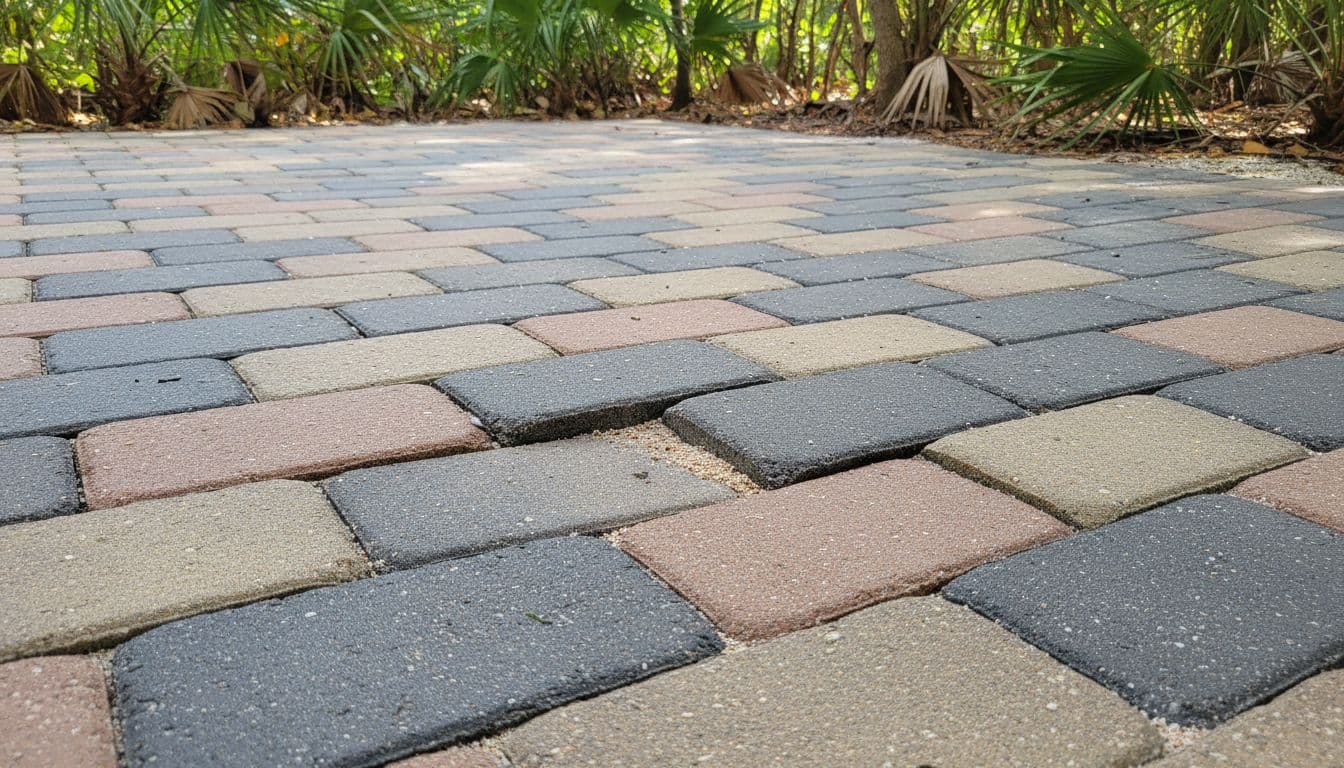
Concrete pavers usually handle this setting better because they aren’t one rigid sheet. Each unit can move a bit with the ground. That small flexibility helps when the soil settles or moisture changes the base.
Concrete works differently. A concrete slab depends on stable support below it and proper slope above it. When water gets under the slab or the ground shifts, cracking can follow. In Charleston, that’s not rare. The city’s focus on green infrastructure and stormwater says a lot about how important drainage is here.
This quick comparison of durability and longevity helps frame the climate issue:
| Charleston factor | Concrete pavers | Concrete slab |
|---|---|---|
| Ground movement | Flexes better | More likely to crack |
| Drainage | Water can move through joints | Needs good slope to shed water |
| Spot repair | Replace a few units | Patch or replace sections |
| Standing water risk | Lower if base is built right | Higher on flat or poorly sloped slabs |
The catch is simple. Concrete pavers only perform well when the base is compacted right and drainage is planned. A local drainage guide for Charleston yards shows how fast small runoff issues can become bigger landscape problems.
In Charleston, most patio failures start below the surface, not on top of it.
Initial Cost vs Cost Over Time
For budget-focused homeowners, poured concrete usually wins the first round. Recent 2026 estimates put poured concrete patios around $6 to $12 per square foot installed. Paver patios often fall around $16 to $25 per square foot, with premium styles going higher.
That gap matters. On a 400-square-foot patio, concrete can cost thousands less in initial cost. If your main goal is a clean, usable patio without a high initial cost, concrete is hard to ignore.
Still, initial cost isn’t the whole story. Repairs tend to separate these two materials over time. If one area of a paver patio settles, a crew can lift and reset that section. If a concrete slab experiences cracking or drains the wrong way, the fix is often more invasive.
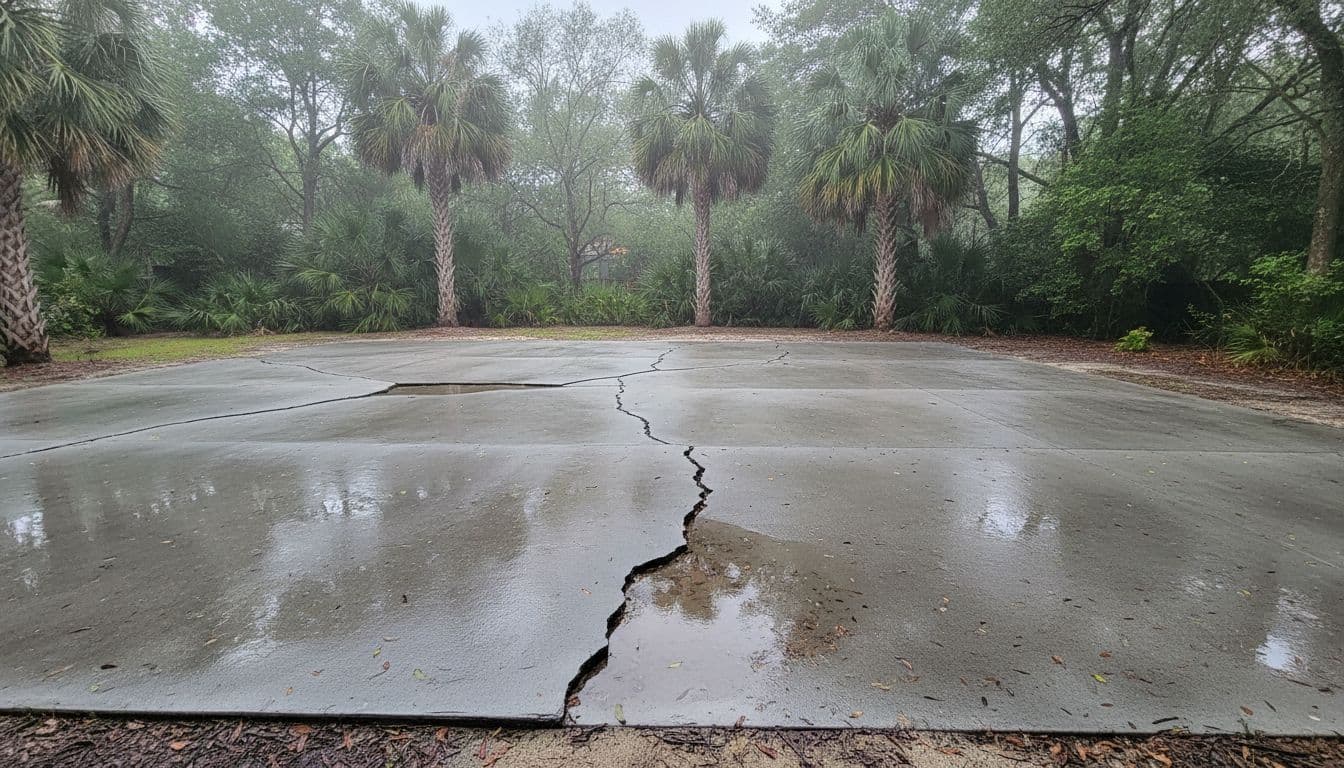
That doesn’t mean concrete is a bad buy. A well-built slab on stable ground can last many years. It simply has less forgiveness. By contrast, pavers cost more because they take more labor, more base prep, and more hand work, but that same system gives you better repairability later, along with superior long-term value, higher resale value, and boosted property value.
Both options can also pick up extra costs from site prep. Demo, grading, drainage work, access limits, edging, and tree root issues all add to the bill. That’s why a flat price per square foot only tells part of the story. For a broader material breakdown, this concrete vs. pavers comparison gives useful context.
Style, upkeep, and when pro installation matters
Looks matter, and both materials deliver impressive design flexibility. Pavers, including brick pavers, concrete pavers, and natural stone options like a flagstone patio, offer extensive pattern, color, and border choices. They fit seamlessly with Charleston homes, blending formal, rustic, coastal, or modern styles without feeling out of place. Large-format pavers, mixed tones, and patios split into dining and lounge zones are popular now, especially for pool decks where slip resistance is vital.
Concrete provides more design flexibility than many homeowners expect, with stamped concrete standing out for its versatility. You can keep it simple with a broom finish or elevate it using stamped concrete textures, stains, exposed aggregate, or a tabby-inspired look that suits the Lowcountry. Natural stone accents can enhance the color and texture here too.
Maintenance and repair needs differ between the two, with neither clearly superior. For pavers and natural stone, use polymeric sand between joints to prevent weed growth, along with occasional fresh joint sand, leveling, and sealing to preserve color and texture. Concrete, particularly stamped concrete finishes, often requires sealing as well, and surface cracking can emerge over time. It may also stain from leaves, rust, grills, or planters.
Professionals shine most during the installation process, especially with proper landscape design for structural integrity. For concrete pavers and natural stone, the base depth, compaction, edge restraint, and slope must be precise; poor prep causes wobble, drift, and low spots. With poured concrete or stamped concrete slabs, subgrade prep, joint placement, reinforcement, and finishing determine long-term performance and resistance to cracking. The installation process demands strong drainage planning for both, and these paver patio drainage tips explain why water management is essential from the start.
A simple way to choose for your Charleston home
If you want the clearest answer for a low maintenance patio, match the material to your top priority.
- Choose poured concrete if your first goal is a lower upfront cost, a clean slab look, and a simple patio on a stable, well-draining site.
- Choose pavers if you care most about long-term flexibility, easier repairs, and better tolerance for movement and moisture.
- Lean toward pavers for yards with drainage concerns that help reduce environmental impact, fill soil, roots, or places that tend to stay damp after rain.
- Lean toward concrete when your budget is tighter but you still want custom style through stamping, color, or decorative finishing.
The best patio in Charleston isn’t always the cheapest or the fanciest. It’s the one that enhances curb appeal and is built for your yard, your budget, and your tolerance for future repairs.
If you’re still stuck on the pavers vs concrete patio choice, start with site conditions first. Drainage and base prep usually tell you more than a sample board ever will. The right decision creates a high-quality outdoor living space with long-term value, durability and longevity, and the low maintenance you desire.